
Research Methods and Techniques \ 1-1

Scientific research; It is the process of learning, collaborating effectively with other researchers and fields, and turning all this into a great excitement, with intense effort and endless effort, passionate curiosity and never-ending quest.
This book has been prepared to help you with its rich content and competent writers in such a process.
This book has been prepared to help you with its rich content and competent writers in such a process.
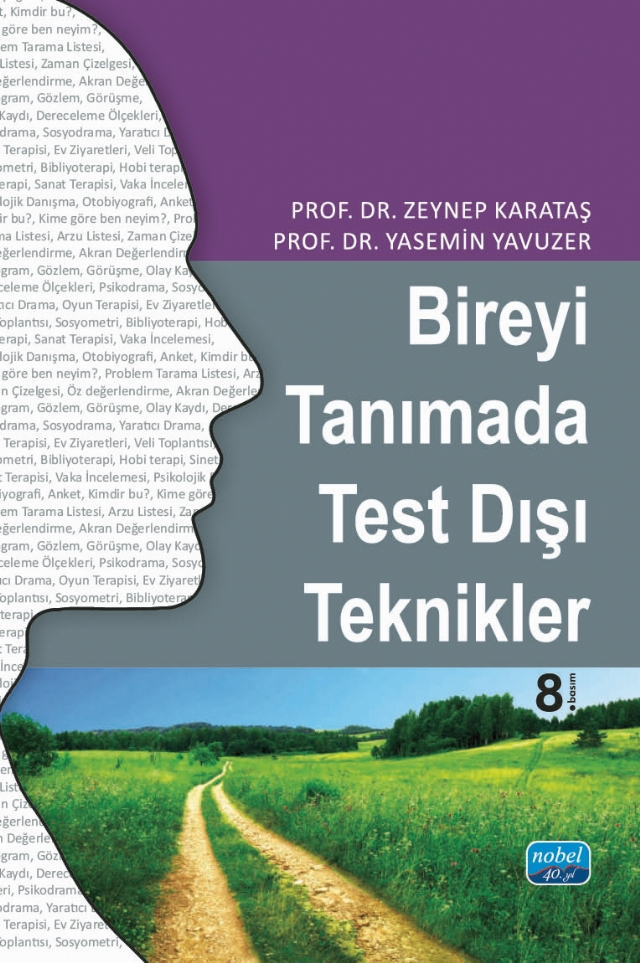
Evaluation in the counseling process is the process of obtaining information in order to learn about the life of the client and the situations leading to counseling and to develop an effective intervention plan. This book, which deals with non-testing techniques that can be used in this process, consists of eight chapters. In the first two chapters of the book, the test techniques used in recognizing the individual and getting to know the individual are briefly included; in other sections, non-test techniques used to identify the individual are discussed in detail. In the third part of the book, non-test techniques based on self-explanation; in the fourth part, observation techniques; in the fifth part, non-testing techniques based on interaction and in the sixth part, non-test techniques based on the opinions of others are included. In the seventh chapter, under the title of other non-test techniques; bibliotherapy, cinetherapy, hobby therapy, art therapy, painting therapy, dance-motion therapy, music therapy, case study and case conference, individual and group psychological counseling are included. The last part of the book includes the student file system used in the field of psychological counseling and guidance.
It is thought that this book will contribute to psychological counseling and guidance students and psychological counselors working in the field as a source book. Any comments and suggestions about the book will strengthen us.
It is thought that this book will contribute to psychological counseling and guidance students and psychological counselors working in the field as a source book. Any comments and suggestions about the book will strengthen us.

Research Methods in Education is a bedside resource that provides information on the patterning of scientific research, data collection, analysis and reporting. In the first part of the book; “Why do we need research?” The answer to the question was sought, and it was emphasized how a prospective teacher or educational scientist should be a researcher. In the second part; The planning processes of educational researches were discussed in all aspects, and these processes were supported with examples. In the third part; “Where should I start the research?” It was tried to answer the question, literature review, ways and methods of accessing primary sources, major databases, journals and internet resources of the field of educational sciences. In the fourth chapter; The problem, problem selection and writing processes, which are the first steps of the research, are explained in detail. In the fifth section; common research types in educational research; In the sixth chapter, the ways and methods about whom and where to apply to solve the problem in educational research are discussed. In the seventh chapter, the methods of obtaining the data needed for the solution of the data; in the eighth chapter, techniques for analyzing data; In the ninth chapter, the issues of checking the accuracy and credibility of the results are discussed in detail. The tenth chapter of this book deals with the subject of “teacher as an action researcher” in detail, which we think is very important for teachers and teacher candidates. In the eleventh and last chapter of this book, ethnography research and processes in education are explained.

The effort to test different aspects of the psychological functions of events and situations is an important subject of contemporary psychology. In the process of realizing this function, the use of psychometric and statistical methods, as well as various, well-known standard tests, which are specially created as required by the relevant event and situation, are common. While psychologists working in the academic field may only focus on research and psychological theories aiming to deepen in a particular field, some other psychologists use this information in the field of applied psychology to provide immediate and practical benefit. Although these approaches show some differences, they are not mutually exclusive, and many psychologists become involved in a research process at some point in their career journey. Every psychologist who wants to be successful in his professional career should have a good command of quantitative and qualitative research methods. Quantitative psychological research includes the application of statistical analysis methods to psychological research and the development of new statistical approaches to measure or explain human behavior.
Most researchers consider the SPSS software program, which is the most widely used statistical analysis program in social sciences and especially behavioral sciences, as a difficult method. Spss Applications and Research Methods for Psychologists book is a guiding guide that also aims to ease the difficulties in this subject. This book will provide psychologists who want to do research with the ability to analyze research problems statistically, and to scientifically analyze the phenomena and events that fall into the field of psychology.
Most researchers consider the SPSS software program, which is the most widely used statistical analysis program in social sciences and especially behavioral sciences, as a difficult method. Spss Applications and Research Methods for Psychologists book is a guiding guide that also aims to ease the difficulties in this subject. This book will provide psychologists who want to do research with the ability to analyze research problems statistically, and to scientifically analyze the phenomena and events that fall into the field of psychology.
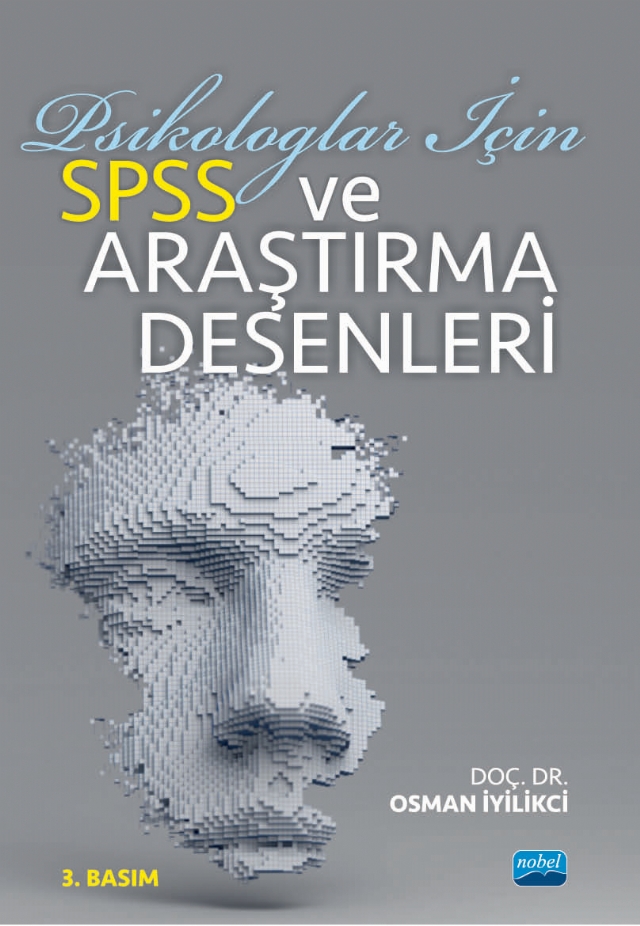
Quantitative data analysis is an important part of scientific research methods in psychology. One of the consequences of this situation is that the research design used during scientific studies in psychology determines which technique will be used to analyze the data obtained. From this point of view, all statistical analyzes in this book are handled together with the research design and measurement level they are related to.
The research examples and the topics covered in the book have been determined in accordance with the terminology that psychologists encounter in research methods, statistics and experimental psychology courses throughout their education. In order to increase clarity, the statistical analyzes in the book are handled through sample data files that the reader can download from the relevant web page. In addition, each analysis is supported by an example of an APA style report.
Considering the topics it covers, it is thought that the book is suitable both for those who are just starting to use SPSS and for researchers with SPSS experience. Therefore, the book is a helpful resource for both students and researchers in scientific research projects, research methods courses, and computer-applied statistics courses.
The research examples and the topics covered in the book have been determined in accordance with the terminology that psychologists encounter in research methods, statistics and experimental psychology courses throughout their education. In order to increase clarity, the statistical analyzes in the book are handled through sample data files that the reader can download from the relevant web page. In addition, each analysis is supported by an example of an APA style report.
Considering the topics it covers, it is thought that the book is suitable both for those who are just starting to use SPSS and for researchers with SPSS experience. Therefore, the book is a helpful resource for both students and researchers in scientific research projects, research methods courses, and computer-applied statistics courses.
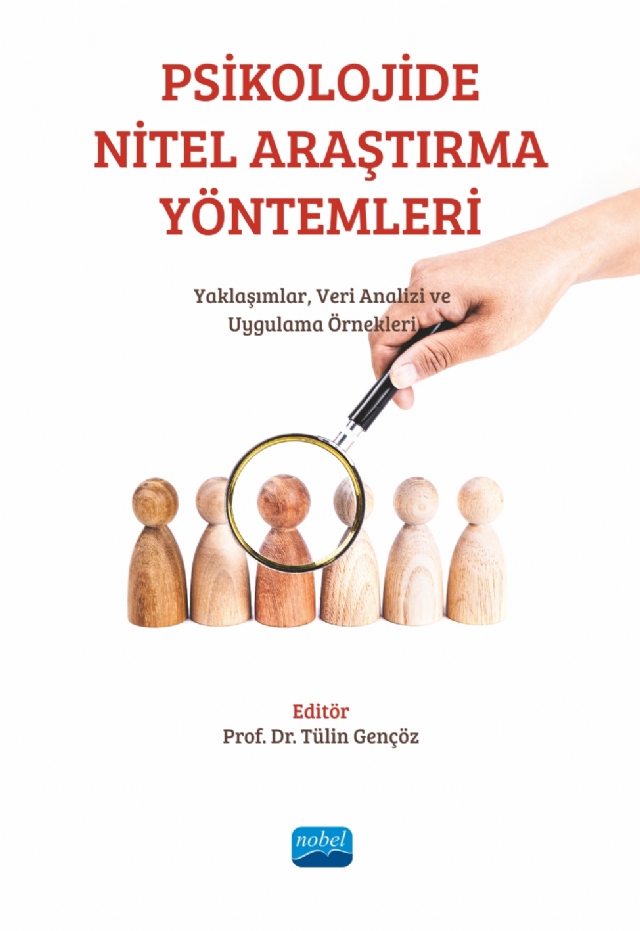
Social science studies, whose focus is human, focus on how individuals make sense of events, interpret them and how they are affected by them. Qualitative research methods are one of the most effective ways to study this subject in depth.
Qualitative research methods are very important scientific research methods that have been preferred more frequently by researchers in recent times, both in terms of working directly with the person in their own language and not denying the potential effect of the researcher on the process. In qualitative studies, the goal is not to determine the truth or falsity of predetermined hypotheses, but to gather in-depth information about why and how experiences affect individuals. Within the framework of this basic stance, qualitative research has different methods, and each method has its own goal and analysis methodology. In this book, these methods are presented to the reader in detail in different chapters, by dealing with all the subtleties within the framework of both the purpose of the research and the ways to be followed according to the method used, and exemplified within the framework of studies in the field of psychology.
Qualitative research methods are very important scientific research methods that have been preferred more frequently by researchers in recent times, both in terms of working directly with the person in their own language and not denying the potential effect of the researcher on the process. In qualitative studies, the goal is not to determine the truth or falsity of predetermined hypotheses, but to gather in-depth information about why and how experiences affect individuals. Within the framework of this basic stance, qualitative research has different methods, and each method has its own goal and analysis methodology. In this book, these methods are presented to the reader in detail in different chapters, by dealing with all the subtleties within the framework of both the purpose of the research and the ways to be followed according to the method used, and exemplified within the framework of studies in the field of psychology.
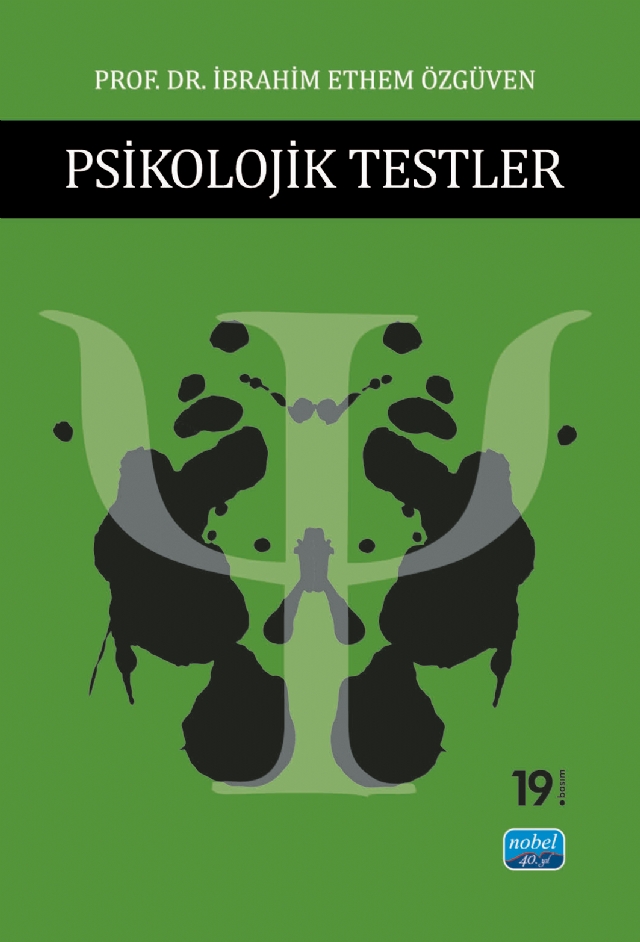
Parallel to the developments in the world, "psychological tests" in our country started as a "translation" movement of tests developed in other countries at the beginning of the current century, and there was no development effort and effort on the tests. In today's sense, writing, testing, applying, doing item analysis, choosing good questions and preparing the posttest, and conducting validity and reliability studies started in the mid-1950s. In the period since the 1950s, important institutions have been established in the fields of measurement technique, psychological tests and test development in our country.
Increasing demand for tests; It has enabled the rapid development of psychology and the branch of psychological tests in our country compared to other branches. Psychological Tests book; He focused on "test development", "appropriate use of psychological tests and appropriate interpretation of the obtained scores", "introducing psychological tests, especially those found in our country".
This book is about psychological tests in undergraduate and partially graduate programs applied in psychology, psychological counseling, psychiatry, assessment and evaluation, program development, child development and education, vocational and technical education, special education, classroom teaching, social services and other related departments of universities. It has been prepared as a “textbook” that can be read.
Increasing demand for tests; It has enabled the rapid development of psychology and the branch of psychological tests in our country compared to other branches. Psychological Tests book; He focused on "test development", "appropriate use of psychological tests and appropriate interpretation of the obtained scores", "introducing psychological tests, especially those found in our country".
This book is about psychological tests in undergraduate and partially graduate programs applied in psychology, psychological counseling, psychiatry, assessment and evaluation, program development, child development and education, vocational and technical education, special education, classroom teaching, social services and other related departments of universities. It has been prepared as a “textbook” that can be read.