
Gerontology-Aging \ 1-1
Our elderly world has also started to age demographically. Although the phenomenon of aging is mostly accepted as a problem of developed countries, it is now an issue that should be emphasized as much as developed countries. Since the beginning of the twentieth century, there has been a significant increase in the number and proportion of the elderly as a result of the improvement of health conditions, decrease in fertility and increase in quality of life with the effect of industrialization. This increase; It has caused rapid and important changes in family and community life, changed social institutions, behavior and values, and affected the status and functions of the elderly. In this process, while the family structure and social structure changed, the readiness of the family and the institutions did not change in the same direction. While the improvement of living conditions ensures longevity, the economic, social and health-related problems of longevity are generally ignored.
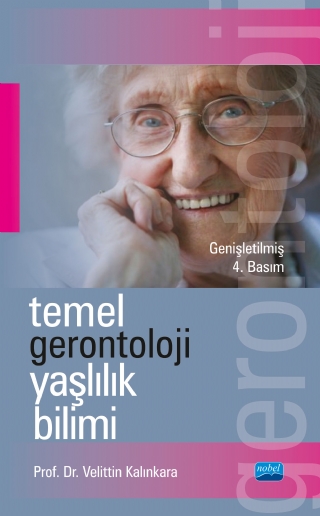
This book will be useful for individuals to equip themselves with basic information about aging and to develop an attitude towards solving problems. It is a source book especially for academicians working in health and social fields, students studying in the field and those who are interested in the subject.
This book will be useful for individuals to equip themselves with basic information about aging and to develop an attitude towards solving problems. It is a source book especially for academicians working in health and social fields, students studying in the field and those who are interested in the subject.