
Examination \ 1-1
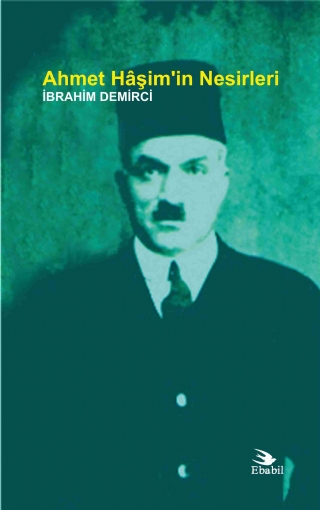
We present one of the most comprehensive books about Ahmet Hâşim, one of the great poets of Turkish Poetry: Ahmet Hâşim's Prose. Ahmet Hâşim, the strong, subtle and wild poet of O Belde, Staircase, Carnation, Piyale, Nightingale, Garden, Suvari, enriched our language and literature with his prose. Ahmet Hâşim, who added "experimental" depth and flavor to almost all of his anecdotes, interviews and travel writings, which he published in various newspapers and magazines and only one third of which he made into a book, avoided being the plaything of literary movements and political ideologies; was able to look at the world with free, curious, sometimes childish and mischievous eyes; benefited as much as possible from the cultural accumulation of all humanity; He produced in-depth texts with an aesthetic approach. İbrahim Demirci, with the meticulousness of a jeweler, dealt with all his prose, both published and unpublished, in this study; evaluated both in terms of content and form. This work, which is a basic source in the context of Hashim's prose, is not a tribute to Hashim, who has already deserved such works, but a duty.
“But why should it be necessary to think like so-and-so in order to have thought right?” “You had to have a soul for you to understand me, and that soul had to be poisoned in a way that was incurable, like the soul of our fellow countryman Loti.” “Mosque and human, robe and turban, barbecue and hookah are not what is called orient; The Orient sees and hears them and adopts them while seeing them. / Literature is in the air of life and in the nets of nerves. Our painters will know this the day they are ready to get out of the turpentine-smelling air of their ateliers.” “Of all the temples, it is the mosque that gets the first light from the sun. Minarets with copper arrows rise in the air to see the sun first.” “No face is as beautiful in reality as it seems in the imagination.” “In Istanbul, there are many poets who are incapable of using their wings, like bees falling into a honey pot, and walk with their feet in shambles, as opposed to a poet whose arm was struck by the electrical wires of a political issue without his knowledge, but once or twice in his life in Istanbul.” “No artist wants to talk about his work to others before creating it. Because a work whose secret has been exposed is doomed to die before it is born.” “One of the last definitions of art, which has been described differently in every era, is this: 'A means of compensating for the caresses that real life has denied us.'” “Germany is a big pink apple. But it is wormy inside.” “A nation that is constantly worried about whether I am loved or not is a nation that has given up hope of being liked.”
“But why should it be necessary to think like so-and-so in order to have thought right?” “You had to have a soul for you to understand me, and that soul had to be poisoned in a way that was incurable, like the soul of our fellow countryman Loti.” “Mosque and human, robe and turban, barbecue and hookah are not what is called orient; The Orient sees and hears them and adopts them while seeing them. / Literature is in the air of life and in the nets of nerves. Our painters will know this the day they are ready to get out of the turpentine-smelling air of their ateliers.” “Of all the temples, it is the mosque that gets the first light from the sun. Minarets with copper arrows rise in the air to see the sun first.” “No face is as beautiful in reality as it seems in the imagination.” “In Istanbul, there are many poets who are incapable of using their wings, like bees falling into a honey pot, and walk with their feet in shambles, as opposed to a poet whose arm was struck by the electrical wires of a political issue without his knowledge, but once or twice in his life in Istanbul.” “No artist wants to talk about his work to others before creating it. Because a work whose secret has been exposed is doomed to die before it is born.” “One of the last definitions of art, which has been described differently in every era, is this: 'A means of compensating for the caresses that real life has denied us.'” “Germany is a big pink apple. But it is wormy inside.” “A nation that is constantly worried about whether I am loved or not is a nation that has given up hope of being liked.”

The Adventure of the Fairy Tale from the East to the West: Tales of the World opens the door to the magnificent world of tales in this vast geography from China to India, from Türkiye to Norway. Tales are a cultural transmission. We can find the value judgments, aesthetics and beauty of the culture to which he belongs in fairy tales. Tales with roots in the past are also a future planner. Tales hide a life lesson within the narrative. Tales give the necessary advice to the listener or reader in that fascinating style. It is almost a personal development training because it imposes success, hope, effort, and a desire to overcome obstacles.
Fatma Ahsen Turan
Fatma Ahsen Turan

World literature, perceived together with different geographies and countries, has a polyphonic structure that cannot be limited to time or place. Every society or nation contributes to this structure to the extent of its own literary ability. In this structure, it is seen that the feelings, thoughts, views of the people who lived in different times or geographies, and the way they express their own existence are shaped by national and local characteristics and become universal.
While national literatures address certain societies, world literature addresses humanity; It is the common heritage of all humanity. While the issue of which authors and works should be considered as a priority when it comes to world literature is open to debate, what matters here is what we hear and feel from these writers and works, regardless of their language, religion and nationality. Regardless of nationality, the language of emotions is common.
In this work called World Literature Studies, world literature and world classics are introduced in general, from the first examples to the present, and then information about literary movements is given; Russian, French, English, Greek, Latin, German, American, Spanish, Italian, Scandinavian, Chinese, Arabic, Persian, Indian, Turkish and Japanese literatures are discussed with examples. In the last part of the work, classical works selected from both Eastern and Western literature have been tried to be analyzed in the light of contemporary analysis methods. In this respect, it is thought that the work will constitute an important resource for researchers and art lovers who are interested in world literature.
While national literatures address certain societies, world literature addresses humanity; It is the common heritage of all humanity. While the issue of which authors and works should be considered as a priority when it comes to world literature is open to debate, what matters here is what we hear and feel from these writers and works, regardless of their language, religion and nationality. Regardless of nationality, the language of emotions is common.
In this work called World Literature Studies, world literature and world classics are introduced in general, from the first examples to the present, and then information about literary movements is given; Russian, French, English, Greek, Latin, German, American, Spanish, Italian, Scandinavian, Chinese, Arabic, Persian, Indian, Turkish and Japanese literatures are discussed with examples. In the last part of the work, classical works selected from both Eastern and Western literature have been tried to be analyzed in the light of contemporary analysis methods. In this respect, it is thought that the work will constitute an important resource for researchers and art lovers who are interested in world literature.
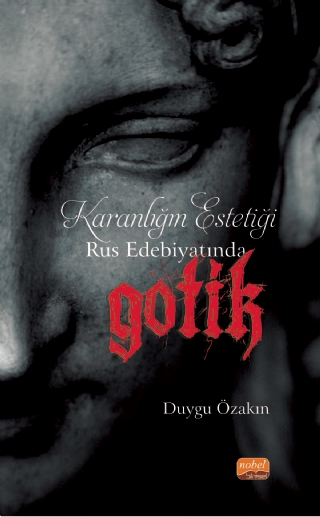
Gothic as a historical stamp, an art movement, a subculture and an academic research area, respectively, continued on the path from history with architecture, and after penetrating literature from there, it entered the agenda of contemporary studies that dealt with literary products from a sociological perspective, passing through the lens of attention to society. This term, which takes its name from the invasion and plundering of the Gothic tribes in 410 AD, was first used by the Italian art historian Giorgio Vasari in 1550 to describe an architectural style as a substitute for the concept of "barbarian" and has since indicated the uncivilized.
This book; It examines the adaptations of the Gothic tradition, which owes its rebirth to its adoption by a group of literary figures in the late 18th century, in Russian literature, from Orest Somov to Nikolay Polevoy, from Vsevolod Garşin to Fyodor Dostoyevsky, in line with contemporary Gothic theories. For this purpose, he traces the “barbarian” identities of the Gothic tribes, which first permeated the historiography and then the art history terminology after their raids on Rome, in the orbit of Gothic themes such as madness and suicide, and contemporary classifications such as Urban Gothic and the uncanny, with the method of sociological criticism.
This book; It examines the adaptations of the Gothic tradition, which owes its rebirth to its adoption by a group of literary figures in the late 18th century, in Russian literature, from Orest Somov to Nikolay Polevoy, from Vsevolod Garşin to Fyodor Dostoyevsky, in line with contemporary Gothic theories. For this purpose, he traces the “barbarian” identities of the Gothic tribes, which first permeated the historiography and then the art history terminology after their raids on Rome, in the orbit of Gothic themes such as madness and suicide, and contemporary classifications such as Urban Gothic and the uncanny, with the method of sociological criticism.

Our first goal in preparing this voluminous work is to enable our new generations to meet with the creative thoughts of their grandfathers and fathers in the recent past; to enable them to see everything with their own eyes and think with their own minds, and to help them circulate their own ideas. In this regard, we will not first lease our minds to the West or borrow their minds and lie on it. Because not only they are thinking, we are thinking too, we are also making “production ideas”.
Today, Turkey is located in the "periphery", not the center that determines and determines the intellectual agenda in the world, and often acts in a peripheral situation depending on the agendas determined by the center.
Therefore, our second goal is to help pave the way for getting out of the periphery and being at the centre. At the same time, it is to help the revival of our civilization, which we belong to in history, as an alternative, and to contribute to our thought life in its rebuilding.
This book also aims to reveal that contemporary Turkish thought is strong enough to be showcased in the world thought arena. If the development of our intellectual life towards its “natural medium” continues, it is certain that Turkish thought will make a significant contribution to world thought by producing newer and more original ideas. Now, we should leave behind the period of self-evaluation according to the thoughts of Western thinkers, and aim at the level where they can evaluate their own thoughts by looking at our products of thought, as in the past. We must be aware of it, so that we can move on to the periods of producing more of our new and universal ideas.
Today, Turkey is located in the "periphery", not the center that determines and determines the intellectual agenda in the world, and often acts in a peripheral situation depending on the agendas determined by the center.
Therefore, our second goal is to help pave the way for getting out of the periphery and being at the centre. At the same time, it is to help the revival of our civilization, which we belong to in history, as an alternative, and to contribute to our thought life in its rebuilding.
This book also aims to reveal that contemporary Turkish thought is strong enough to be showcased in the world thought arena. If the development of our intellectual life towards its “natural medium” continues, it is certain that Turkish thought will make a significant contribution to world thought by producing newer and more original ideas. Now, we should leave behind the period of self-evaluation according to the thoughts of Western thinkers, and aim at the level where they can evaluate their own thoughts by looking at our products of thought, as in the past. We must be aware of it, so that we can move on to the periods of producing more of our new and universal ideas.