
Electronics, Electrical and Energy Systems Engineering \ 1-1
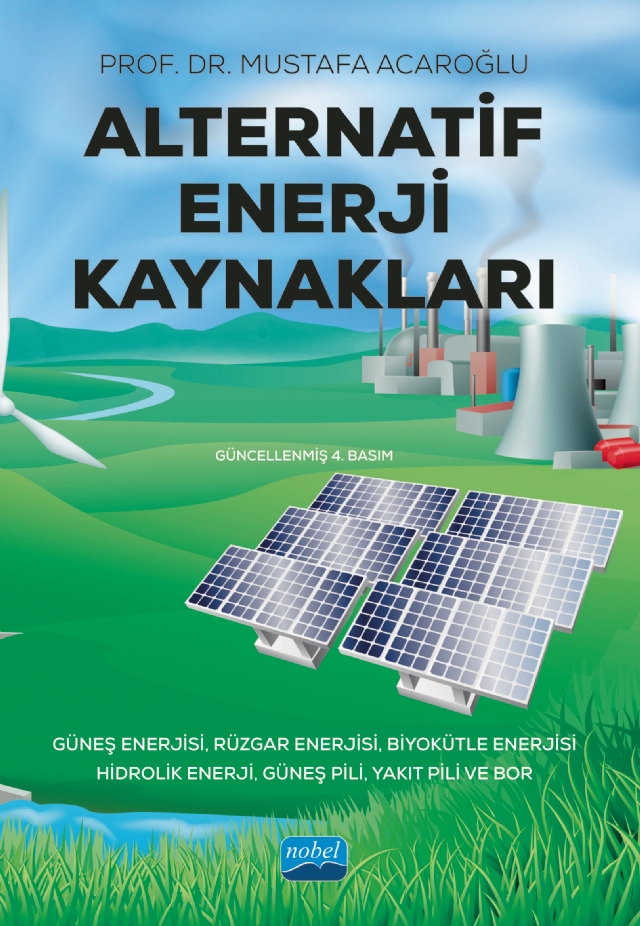
Energy is the ability of a body or a system to produce activity outside of itself. With another definition, it is the production of work and heat by an object or system. Energy and energy resources have been the main key to developments in the world, have determined the fate of countries and caused wars and continue to be. The history of energy, which is an inseparable element of nature and the universe, is in a way as old as the history of humanity.
Energy and energy use are at the forefront of the determining factors of a country's economic, cultural and social development. Energy and energy resources; They are the most important inputs in the source of life of societies and at every stage of life.
In the world; With population growth, industrialization and urbanization, the demand for natural resources and energy is gradually increasing due to the increasing trade and production opportunities as a result of globalization.
In this book, the basic principles of alternative energy sources such as sun, wind, hydrogen, natural gas, LPG, biomass energy, vegetable oils, biofuels-biomethanol, biodiesel and bioethanol, boron energy are given. It is aimed that this book will be a reference source for our students, especially in related courses involving energy, fuels and alternative energy sources at our universities.
Energy and energy use are at the forefront of the determining factors of a country's economic, cultural and social development. Energy and energy resources; They are the most important inputs in the source of life of societies and at every stage of life.
In the world; With population growth, industrialization and urbanization, the demand for natural resources and energy is gradually increasing due to the increasing trade and production opportunities as a result of globalization.
In this book, the basic principles of alternative energy sources such as sun, wind, hydrogen, natural gas, LPG, biomass energy, vegetable oils, biofuels-biomethanol, biodiesel and bioethanol, boron energy are given. It is aimed that this book will be a reference source for our students, especially in related courses involving energy, fuels and alternative energy sources at our universities.

The information about alternative energy sources, which are gaining importance day by day, is in a process of constant change and renewal. In this book, it is aimed to bring together the current information obtained from more than three hundred and fifty domestic and foreign sources for alternative energy sources and bring them together with the reader. In the following sections of the book, which starts with the presentation of information and definitions about energy and energy resources; The basic concepts and principles of solar energy, wind energy, hydroelectric energy, biomass energy and geothermal energy, which are among alternative energy sources, are included. The chapters in the book contain a rich content about alternative energy sources, as well as a list of achievements and chapter evaluation questions. The book can be used as a source book by academicians, teachers and related researchers.
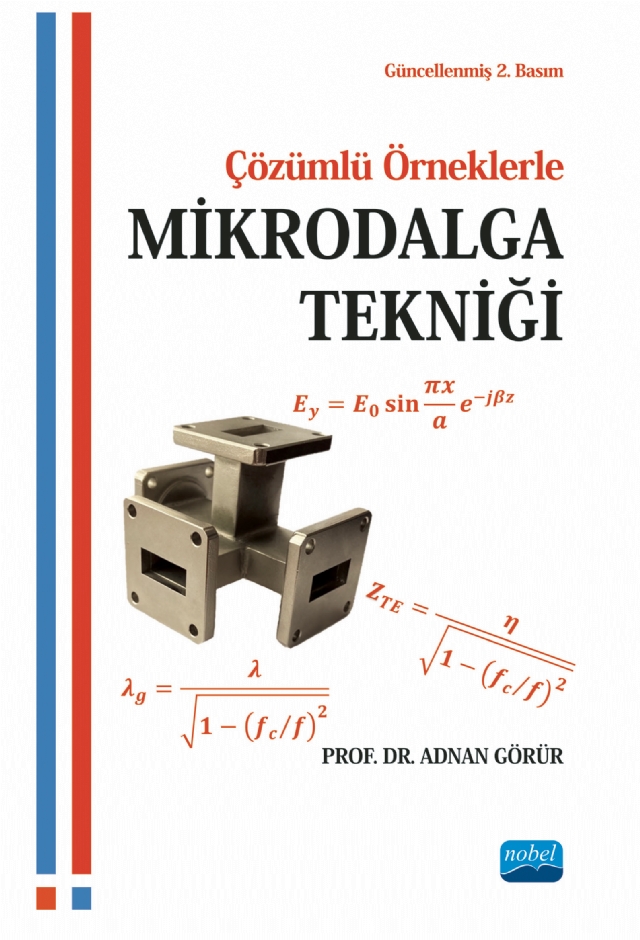
The Microwave Technique with Solved Examples book has been prepared as a supplementary textbook covering the basic topics in the field of microwave theory and technique. The topics in the book are presented in an appropriate manner to undergraduate students studying in the field of electrical and electronic engineering. Assuming that the students have sufficient knowledge about electromagnetic fields and waves, it started with a very short summary of electromagnetic theory. Transmission Lines, Impedance Conversion and Impedance Matching, Smith Diagram, Rectangular and Circular Waveguides, Microwave Hole Resonators and Two-Gate Circuit Analysis; It has been prepared taking into account the understanding, comprehension and application abilities of undergraduate students. At the end of each chapter, more than 120 solved examples are given in the book, in sufficient number and variety.
This book consists of 12 separate chapters. First, the basic characteristics of digital measurement techniques are explained and different examples are given on this subject. Principles of measuring frequency and time interval, principles and architectures of digital-analog and analog-digital converters, internal structures of digital voltmeters and multimeters, methods of measuring non-electrical signals such as displacement with a high accuracy and resolution, principles and algorithms for automatic correction of errors in measuring systems and many sample circuits are given under the title of "Modern Measurement Techniques".
To follow the topics in the book; It is necessary to have knowledge about electrical circuits, electrical and electronic measurements, analog and digital electronics.
Thanks to the topics in the book and the examples given, this book; It has been prepared for the benefit of undergraduate and graduate students and engineers studying in electrical, electronics, computer, mechatronics and control engineering.
To follow the topics in the book; It is necessary to have knowledge about electrical circuits, electrical and electronic measurements, analog and digital electronics.
Thanks to the topics in the book and the examples given, this book; It has been prepared for the benefit of undergraduate and graduate students and engineers studying in electrical, electronics, computer, mechatronics and control engineering.
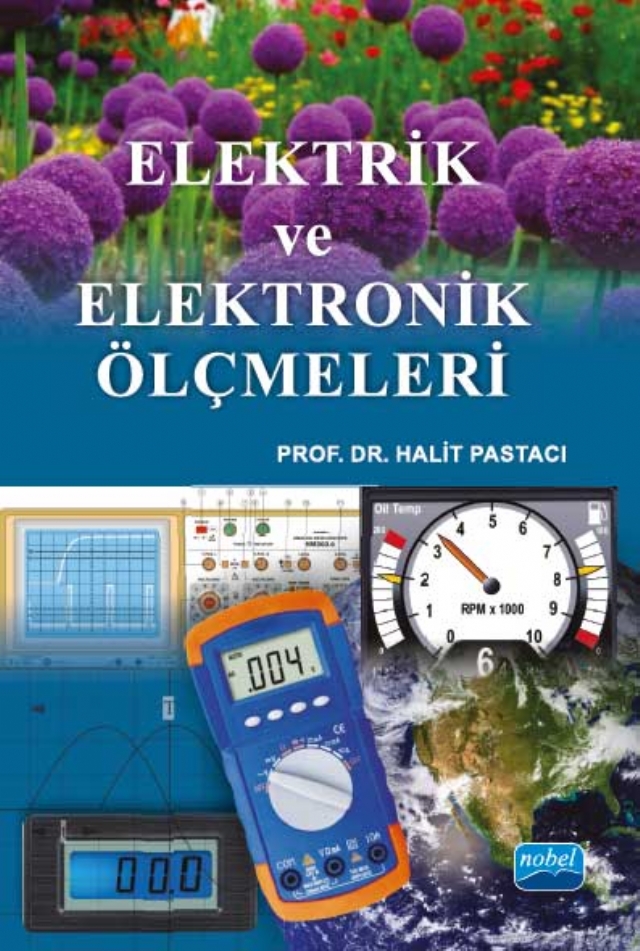
A better understanding of the events in the world we live in is possible with the development of measurement techniques and laboratory facilities. Measurement and evaluation of physical events are made with various measuring devices. A large part of the devices used in measurement consists of electrical and electronic circuits. Based on this, the book prepared; In addition to dealing with the basic features of electrical and electronic measurements, it will lead the students to a great improvement in their practical applications with the explanation and carefully selected topics thanks to the various examples given.
There are 13 chapters in the book. Although some of the episodes can be watched with electrotechnical knowledge, basic electronics knowledge is needed to watch some episodes. In order to follow the 11th chapter, where digital devices are explained, and the 13th chapter, where computer-controlled measurement systems are explained, it is necessary to know the basic subjects about computers and logic circuits. It should be noted that it will benefit a wide range of students at art school, vocational school and university level.
There are 13 chapters in the book. Although some of the episodes can be watched with electrotechnical knowledge, basic electronics knowledge is needed to watch some episodes. In order to follow the 11th chapter, where digital devices are explained, and the 13th chapter, where computer-controlled measurement systems are explained, it is necessary to know the basic subjects about computers and logic circuits. It should be noted that it will benefit a wide range of students at art school, vocational school and university level.
This book has been prepared in the light of the latest innovations and methods in the ever-changing and evolving field of electronics. With the basic information in the book, it is possible to make all kinds of applications of electronics. The information is enriched with numerical examples and experiments. In this direction, the book will benefit the fields of electrical, electronics, computer, mechatronics and control engineering and department students.
This book, titled "Electronic Circuits", has emerged as a result of the knowledge of the courses you have given at Yıldız Technical University Electrical Engineering Department and currently at Haliç University Electrical-Electronics Engineering Department and the experience and experience of the laboratories I have had it built.
This book is a continuation of my previous book “Electronics” published by Nobel Publishing House. Therefore, my book “Electronics” must be watched first.
The book consists of two main parts. The first part is in the form of 10 separate sections under the title of Electronic Circuits (Analysis, Design and Problem). The second part was organized as 10 separate experiments as Electronic Circuits Laboratory (Experiment-Report).
The experiments here are more advanced experiments, a continuation of the experiments in my book "Electronics".
Thanks to both the numerical examples given and the attached experiments, this book; It has been prepared for the benefit of students studying in electrical, electronics, computer, mechatronics and control engineering.
This book is a continuation of my previous book “Electronics” published by Nobel Publishing House. Therefore, my book “Electronics” must be watched first.
The book consists of two main parts. The first part is in the form of 10 separate sections under the title of Electronic Circuits (Analysis, Design and Problem). The second part was organized as 10 separate experiments as Electronic Circuits Laboratory (Experiment-Report).
The experiments here are more advanced experiments, a continuation of the experiments in my book "Electronics".
Thanks to both the numerical examples given and the attached experiments, this book; It has been prepared for the benefit of students studying in electrical, electronics, computer, mechatronics and control engineering.
Book; it consists of nine sections under the titles of Control Circuits, Simatic S7-200 Control Unit, Basic Control Applications, Design and Implementation, Program Control Operations, Numerical Operations, Real Time Operations, Interrupted Operation and Questions. In the book, it is shown how the mathematical expressions obtained for the design of a control system are realized with the Simatic S7-200 family PLC using standard (IEC 61131) PLC languages (such as LAD, FBD). However, since the expression of the obtained logic functions in standard PLC languages is the same, it is also valid for PLC models of other companies that can be programmed with all standard PLC languages. Many examples in the book can be easily adapted and applied to other PLC models with simple editing.
Lighting is a discipline that is necessary for all living things and determines the quality of life. In recent years, besides the obligatory use of lighting, its visuality is also considered important, and therefore the concept of lighting design has emerged. Lighting design is classified as industrial areas, highways and pedestrian roads, building facades, sports centers, shopping areas, historical areas and objects, parking lots, interior areas, and each has different parameters in accordance with standards. In lighting technology, it is desired that the design made outside of the technical details appeals to the eye. In today's lighting projects, it aims to make the environment safer, more comfortable and more efficient in terms of energy saving, by transforming the space it is in into an automation, not just lighting. In addition, lighting has been fully integrated into smart building systems and has played an active role in improving living conditions.
This book provides sectoral information for those who consider lighting as a profession to have an idea. It contains; the concept of light, types of lighting, design principles of lighting systems, lighting control techniques and principles, protocols used in lighting automation are explained and sample applications are included.
This book provides sectoral information for those who consider lighting as a profession to have an idea. It contains; the concept of light, types of lighting, design principles of lighting systems, lighting control techniques and principles, protocols used in lighting automation are explained and sample applications are included.
One of our biggest concerns in today's urban life is that our electronic gadgets run out of charge and that we cannot find wi-fi for the internet. The charging problem has made even the most novice user curious about battery-related issues. When the rising electric vehicle, charging infrastructure and smart city designs are added to this, the subject has reached a high level of importance. Li-ion batteries come first among the most effective sectoral solutions for all these needs. This has made studies on Li-ion batteries popular. Despite its increasing popularity, Turkish resources containing academic and general information about Li-ion batteries are very limited.
This book; It aims to explain Li-ion batteries, their structure, applications, control, problems and production in an easy language. While doing this, it aims to contribute to the researchers in going into the details of the subject by giving the necessary information and resources to the researchers who are interested in the subject by going beyond the general framework.
The book consists of six chapters:
In the first part; As a general introduction to energy and storage, the basic concepts of batteries, the mathematics of the business and the most basic information, and the unique language of introductory Li-ion batteries are explained.
In the second part; For undergraduate, graduate and doctoral students who want to specialize in this subject, the content of Li-ion batteries, their basic problems, academic studies on basic problems, the state of technology and Li-ion battery chemistry are explained.
In the third part; The production process and production infrastructure of Li-ion batteries are discussed.
In the fourth chapter; The history of batteries parallel to electrification and applications of Li-ion batteries are presented. The chapter also examines the expected benefits from energy storage.
In the fifth section; How Li-ion batteries should work when brought together, namely Battery Management Systems, is explained.
In the sixth and last chapter, the safety risks of using Li-ion batteries and the causes and solutions of these risks are summarized.
Hoping to contribute to the reader…
This book; It aims to explain Li-ion batteries, their structure, applications, control, problems and production in an easy language. While doing this, it aims to contribute to the researchers in going into the details of the subject by giving the necessary information and resources to the researchers who are interested in the subject by going beyond the general framework.
The book consists of six chapters:
In the first part; As a general introduction to energy and storage, the basic concepts of batteries, the mathematics of the business and the most basic information, and the unique language of introductory Li-ion batteries are explained.
In the second part; For undergraduate, graduate and doctoral students who want to specialize in this subject, the content of Li-ion batteries, their basic problems, academic studies on basic problems, the state of technology and Li-ion battery chemistry are explained.
In the third part; The production process and production infrastructure of Li-ion batteries are discussed.
In the fourth chapter; The history of batteries parallel to electrification and applications of Li-ion batteries are presented. The chapter also examines the expected benefits from energy storage.
In the fifth section; How Li-ion batteries should work when brought together, namely Battery Management Systems, is explained.
In the sixth and last chapter, the safety risks of using Li-ion batteries and the causes and solutions of these risks are summarized.
Hoping to contribute to the reader…

In this book; technical information is given on machinery, mechanics, mechatronics, materials, manufacturing, electricity and electronics. It can be considered as a technical manual. The problems have been prepared in an original way. Using and converting units is very helpful. Technology cannot correct calculation errors as much as the human mind! While doing a job, hit the brake and stop where you can't understand. Use your mind, ask someone who knows, read this book… Technical works do not make mistakes! Technical personnel who can read and solve problems are very valuable. This is a practice book. It will be very useful for you in technical matters.

Microwave Techniques 1 explains why classical circuit theory approaches used in electrical engineering are invalid in the high frequency region, based on the relationship between wavelength and the physical length of electronics; It deals in detail with the problems that arise in the design and use of high-frequency equipment that comes into use due to the increasing data and data processing speed needs.
Usage of dB, dBmW and dBW concepts together with satellite equations, reflection and transmission coefficients, standing wave ratio, insertion loss, reflection loss, use of Smith Chart, frequency dependent variation of conjugate impedance behavior of electrical conductors, maximum power transfer and impedance matching, microwave filters , transmission line equations, distributed circuit analysis, scattering matrix and the use of microwave passive elements and microwave measurement techniques. It is aimed for the reader to grasp the subject with many solved examples and end-of-chapter problems distributed throughout the book.
Usage of dB, dBmW and dBW concepts together with satellite equations, reflection and transmission coefficients, standing wave ratio, insertion loss, reflection loss, use of Smith Chart, frequency dependent variation of conjugate impedance behavior of electrical conductors, maximum power transfer and impedance matching, microwave filters , transmission line equations, distributed circuit analysis, scattering matrix and the use of microwave passive elements and microwave measurement techniques. It is aimed for the reader to grasp the subject with many solved examples and end-of-chapter problems distributed throughout the book.
Our book has been prepared for those who are considering developing a wide range of products by combining their electronic knowledge with microcontrollers. It is thought that it will appeal to a wide readership that will include students from vocational schools of universities and engineering faculties, from beginners to intermediate users, and electronics lovers as a hobby.
In the book, which was basically prepared on the basis of 8-bit PIC® microcontrollers of Microchip™, Microelectronika company's “mikroC PRO for PIC” version 7 of 2019 was used in programming the microcontrollers, and the PIC C compiler was partially used. All the applications described in the book were tested in the 2018 8.7 version of the “PROTEUS-ISIS® Professional” electronic circuit drawing and animation program, and some of these applications were made by preparing printed circuits in the “PROTEUS-ARES®” printed circuit drawing program. The sample work files of all these applications have been published on the internet address given with the QR code. In addition, basic coding information and technical guide information on electronic components have been prepared as a separate appendix so that readers who are better than the beginner will not get bored.
In the USB-based applications section of the book, the application of a PID-controlled DC motor control circuit implemented using the LabVIEW program of the “National Instruments - NI” company is also explained in detail.
In addition, while the new generation "Low Power" 8-bit microcontrollers are mentioned in our book, register-based programming is emphasized in coding, and the principles of creating user-defined libraries are shown in practice as well as ready-made libraries.
Applications that can be found in the book include:
• Low and high current 7-Segment display applications
• Text LCD and Graphic LCD applications
• Multi-screen control application with driver integrated
• DC, Step and Servo motor control applications
• Use of electronic switching elements and AC load applications
• EEPROM programming
• Usage and sample applications of USART communication and UART converter modules
• Serial communication applications (I2C, SPI, RS-232, RS-485)
• 1-Wire application
• USB communication and applications
• Capture/Compare/PWM and Advanced CCP module applications
• RF communication and Manchester Code applications
• Internal ADC, voltage reference and advanced ADC applications
• Internal and external DAC application
• Internal capacitive sensor application
In the book, which was basically prepared on the basis of 8-bit PIC® microcontrollers of Microchip™, Microelectronika company's “mikroC PRO for PIC” version 7 of 2019 was used in programming the microcontrollers, and the PIC C compiler was partially used. All the applications described in the book were tested in the 2018 8.7 version of the “PROTEUS-ISIS® Professional” electronic circuit drawing and animation program, and some of these applications were made by preparing printed circuits in the “PROTEUS-ARES®” printed circuit drawing program. The sample work files of all these applications have been published on the internet address given with the QR code. In addition, basic coding information and technical guide information on electronic components have been prepared as a separate appendix so that readers who are better than the beginner will not get bored.
In the USB-based applications section of the book, the application of a PID-controlled DC motor control circuit implemented using the LabVIEW program of the “National Instruments - NI” company is also explained in detail.
In addition, while the new generation "Low Power" 8-bit microcontrollers are mentioned in our book, register-based programming is emphasized in coding, and the principles of creating user-defined libraries are shown in practice as well as ready-made libraries.
Applications that can be found in the book include:
• Low and high current 7-Segment display applications
• Text LCD and Graphic LCD applications
• Multi-screen control application with driver integrated
• DC, Step and Servo motor control applications
• Use of electronic switching elements and AC load applications
• EEPROM programming
• Usage and sample applications of USART communication and UART converter modules
• Serial communication applications (I2C, SPI, RS-232, RS-485)
• 1-Wire application
• USB communication and applications
• Capture/Compare/PWM and Advanced CCP module applications
• RF communication and Manchester Code applications
• Internal ADC, voltage reference and advanced ADC applications
• Internal and external DAC application
• Internal capacitive sensor application
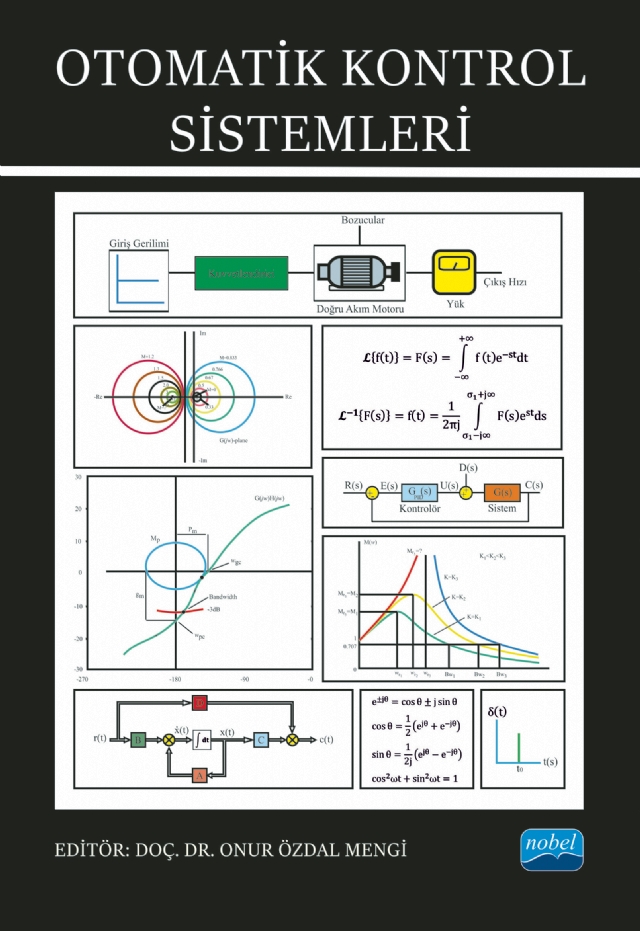
Automatic Control Systems is the basic book that explains how the electronic and mechanical systems, which are the foundation of the industry, should be controlled. When all systems are controlled correctly, the desired production can be made. Therefore, it is important to design and adjust the controllers correctly in every field. The work can be divided into electrical-electronic engineering, mechanical engineering, mechatronics engineering, energy systems engineering, etc. It is a book written for the benefit of students in courses such as Automatic Control Systems, Control Systems, Introduction to Control Systems. It mainly appeals to undergraduate students and will also be beneficial to graduate students. The book is designed as a whole with simple lectures, solved questions, Matlab codes and simulations of these questions. Automatic control systems describe the basic techniques and calculations used by engineers working in R&D departments of companies in product development and simulation studies. Modeling, computation and control of electrical, physical and other systems in the s domain is the main topic of this book.

In this book; The mathematical models used for the design, analysis, simulation and control of industrial robots are discussed. Analytical methods applied in modeling serial manipulators defined by open kinematic chains are presented from an engineering point of view. Analytical modeling methods; It is introduced under the headings of geometry, kinematics, static and dynamics, with a systematic approach that is easy to program. Detailed application examples are given for serial manipulator structures commonly encountered in industrial robots.
Book; It has been prepared as a basic resource that can be followed in robotics courses given in undergraduate and graduate programs in engineering departments of universities such as Machinery, Electric-electronics, Mechatronics, Control and Computer. The book can also be considered as a reference resource for engineers and researchers working on robot design, analysis and implementation.
Book; It has been prepared as a basic resource that can be followed in robotics courses given in undergraduate and graduate programs in engineering departments of universities such as Machinery, Electric-electronics, Mechatronics, Control and Computer. The book can also be considered as a reference resource for engineers and researchers working on robot design, analysis and implementation.

In this book, after giving explanatory information about why numerical methods are needed, the issue of numerical errors encountered in all methods is examined.
In the book, which was studied with the MATLAB software package, first of all, basic information about the subject was given in the introduction part of the chapters on numerical methods.
Throughout the other chapters;
• linear equations and systems
• nonlinear equations and systems
• eigenvalue
• interpolation
• curve fitting
• derivative
• integral
• initial value
• limits
Numerical methods used for solving problems are explained and how these methods can be applied to related problems in solving different engineering problems.
In the book, which was studied with the MATLAB software package, first of all, basic information about the subject was given in the introduction part of the chapters on numerical methods.
Throughout the other chapters;
• linear equations and systems
• nonlinear equations and systems
• eigenvalue
• interpolation
• curve fitting
• derivative
• integral
• initial value
• limits
Numerical methods used for solving problems are explained and how these methods can be applied to related problems in solving different engineering problems.
Electromagnetism theory, one of the most rooted disciplines of physics, plays a key role in shaping electrical-electronic engineering. This book has been prepared with the aim of sharing the original content of the electromagnetic field theory course that I have given to my second year undergraduate students in the faculties of electrical and electronics for nearly thirty years, in an expanded form, in a conversational style with university students and graduate researchers of all levels who are interested in physics. In accordance with the physical worldview and the roadmap for the analytical study of electromagnetic phenomena, presented in the first chapter, our discussions focused on the basic concepts and theoretical foundations of static electrical, magnetic and electromagnetic spaces. The theoretical flow is accompanied by 13 application sets of canonical problems. Frequently used footnotes aim to provide additional information and direct the reader to research. Welcome to our lesson!
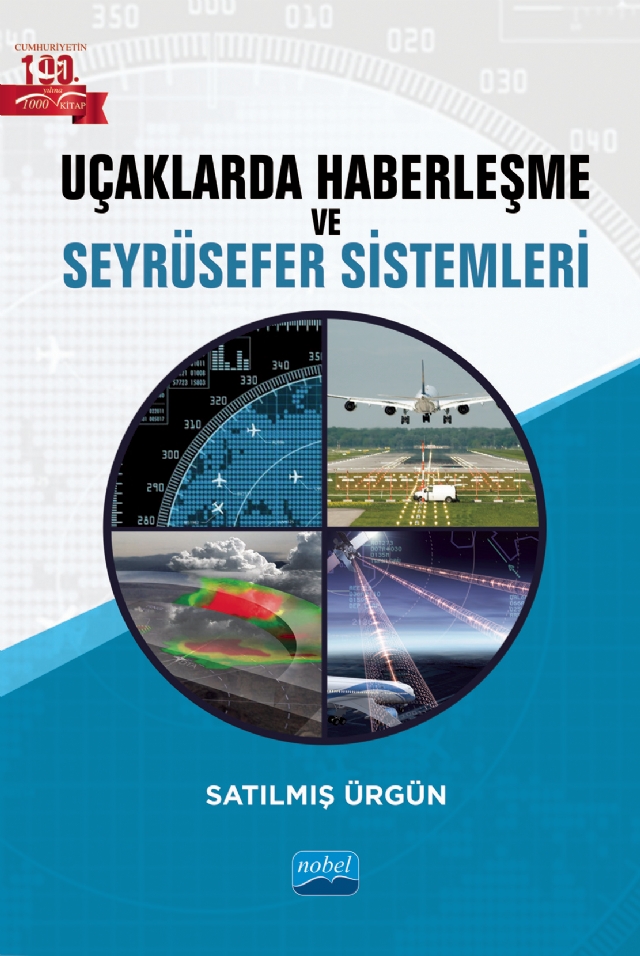
This book aims to make the reader absorb the basic topics under aircraft communication and navigation systems in their own language. Book content EASA Part-66 Module 13 section covers all ATA 23-34 sub-headings. An extensive introduction has been prepared in order to prepare the reader for the relevant content. Although some basic chapters were added, the reader was assumed to have a basic knowledge of flight controls and electrical/electronics (generally equivalent to Modules 3 and 4 of the EASA Part-66 syllabus). Additional topics have been added outside of EASA Part-66 / ATA 23/24 content to adapt to developing technologies.
The content of the Communication and Navigation Systems in Aircraft book has been created to cover the basic information required to certify the technical personnel engaged in engineering and maintenance activities in commercial aircraft. In addition, this book is addressed to military and civil aircraft pilots and people in related engineering programs working in the aviation industry.
It is important for the reader to know that this book is not intended to replace aircraft maintenance documentation. No attempt is made to provide the level of detail required by personnel engaged in the maintenance or flight of certain types of aircraft. For this reason, approved aircraft documents and updated instructions should be consulted for detailed information.
The content of the Communication and Navigation Systems in Aircraft book has been created to cover the basic information required to certify the technical personnel engaged in engineering and maintenance activities in commercial aircraft. In addition, this book is addressed to military and civil aircraft pilots and people in related engineering programs working in the aviation industry.
It is important for the reader to know that this book is not intended to replace aircraft maintenance documentation. No attempt is made to provide the level of detail required by personnel engaged in the maintenance or flight of certain types of aircraft. For this reason, approved aircraft documents and updated instructions should be consulted for detailed information.
This book is an advanced original text on Vector Calculus aiming university students and researchers from engineering and basic sciences who are interested in the analytical aspects of classical electromagnetism as well as other disciplines of continuum physics. It is an outgrowth of the author’s published works and university lectures throughout decades. The original material in the text includes the concept of Nabla Algebra, a complementary perspective on the network of relations between vector operators and integral theorems, vector algebraic properties of phasors, differential and commutative properties of the comoving time derivative operator, transport theorems in volumetric and nonvolumetric domains, generalized vector operators for studying singularities, spatial derivatives of point, space curve and surface type distributions of arbitrary order, and distributional forms of Stokes’s and divergence theorems. The reader is assumed to be familiar with the notions of differential and integral calculus at sophomore level.