
Education Management and Supervision \ 1-1
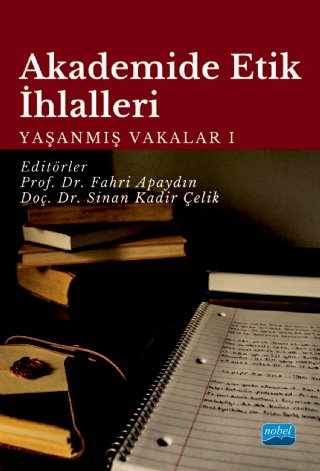
“Nepotism, oppression, exclusion and liquidation… The history of the universities and academic life of the Republic of Turkey has been systematically tarnished by these three diseases. I think that the book Ethical Violations in Academia: Experienced Cases makes meaningful and up-to-date contributions to the exposure of these diseases.”
prof. Dr. Korkut Boratav
"Being able to take part in academic life, which should be an environment where the truth is sought by discussing and discussing, requires human respect as much as respect for truth. Truth morality is the morality of people who seek the truth. There is no human being in a structure without values that create this morality. Here, this book is an inspiration for academic moral life from different perspectives. It consists of studies that reveal the values that should be and the problems in living these values. I respectfully welcome the efforts of the compilers and authors, and I wish that the university, which should be a respected institution, will walk towards competence step by step with such studies."
prof. Dr. Ahmet Inam, METU
“This book, published by AKETDER, symbolizes a bold step that brings the issue of ethical violations, one of the most important problems of the academy, to the agenda. The examples in the book about ethical violations, which are known to exist and widespread in academia, will also be a guide on how to overcome this problem. I congratulate the Association and its editors for their efforts and courageous actions in this direction.”
prof. Dr. Gülten DİNÇ, Istanbul University-Cerrahpaşa
“Prof. Dr. Fahri Apaydın and Assoc. Dr. This unique work, titled "Violations of Ethics in Academia", prepared for publication by Sinan Kadir Çelik, reflects the ethical situation of the academy. When it comes to academia, the first thing that comes to mind is mobbing. mobbing; It causes mental health disorders, loss of self-confidence, loss of self-esteem, and suicide in people. It is very important to raise awareness on this issue and to make legal arrangements immediately. We know that mobbing incidents occur frequently in Turkey, especially in universities, and that administrators tend to cover up. In this respect, the work we have is the writing and disclosure of what was covered up by the academics themselves.”
prof. Dr. Kemal Kocabaş, Dokuz Eylul University
It is necessary to congratulate all those who have contributed to the hope that this valuable study, which brings up a number of problems that seriously affect the scientific freedom environment and academic life in our country, with its historical examples, will be effective in overcoming these problems, especially to the extent that it raises the awareness of young scientists.
prof. Dr. Galip Yalman, METU Political Science, retired faculty member
This book has accomplished a very important work and a first by reminding the scientists of our country about the moral obligations of being an academician. I hope that this book, which I wish to continue, will be an opportunity to confront our common ethical violations and mistakes, and recommend all scientists and university students to obtain this book and read it carefully; I congratulate the compilers and contributors of this book.
prof. Dr. Dogan Ozlem, Yeditepe University
prof. Dr. Korkut Boratav
"Being able to take part in academic life, which should be an environment where the truth is sought by discussing and discussing, requires human respect as much as respect for truth. Truth morality is the morality of people who seek the truth. There is no human being in a structure without values that create this morality. Here, this book is an inspiration for academic moral life from different perspectives. It consists of studies that reveal the values that should be and the problems in living these values. I respectfully welcome the efforts of the compilers and authors, and I wish that the university, which should be a respected institution, will walk towards competence step by step with such studies."
prof. Dr. Ahmet Inam, METU
“This book, published by AKETDER, symbolizes a bold step that brings the issue of ethical violations, one of the most important problems of the academy, to the agenda. The examples in the book about ethical violations, which are known to exist and widespread in academia, will also be a guide on how to overcome this problem. I congratulate the Association and its editors for their efforts and courageous actions in this direction.”
prof. Dr. Gülten DİNÇ, Istanbul University-Cerrahpaşa
“Prof. Dr. Fahri Apaydın and Assoc. Dr. This unique work, titled "Violations of Ethics in Academia", prepared for publication by Sinan Kadir Çelik, reflects the ethical situation of the academy. When it comes to academia, the first thing that comes to mind is mobbing. mobbing; It causes mental health disorders, loss of self-confidence, loss of self-esteem, and suicide in people. It is very important to raise awareness on this issue and to make legal arrangements immediately. We know that mobbing incidents occur frequently in Turkey, especially in universities, and that administrators tend to cover up. In this respect, the work we have is the writing and disclosure of what was covered up by the academics themselves.”
prof. Dr. Kemal Kocabaş, Dokuz Eylul University
It is necessary to congratulate all those who have contributed to the hope that this valuable study, which brings up a number of problems that seriously affect the scientific freedom environment and academic life in our country, with its historical examples, will be effective in overcoming these problems, especially to the extent that it raises the awareness of young scientists.
prof. Dr. Galip Yalman, METU Political Science, retired faculty member
This book has accomplished a very important work and a first by reminding the scientists of our country about the moral obligations of being an academician. I hope that this book, which I wish to continue, will be an opportunity to confront our common ethical violations and mistakes, and recommend all scientists and university students to obtain this book and read it carefully; I congratulate the compilers and contributors of this book.
prof. Dr. Dogan Ozlem, Yeditepe University
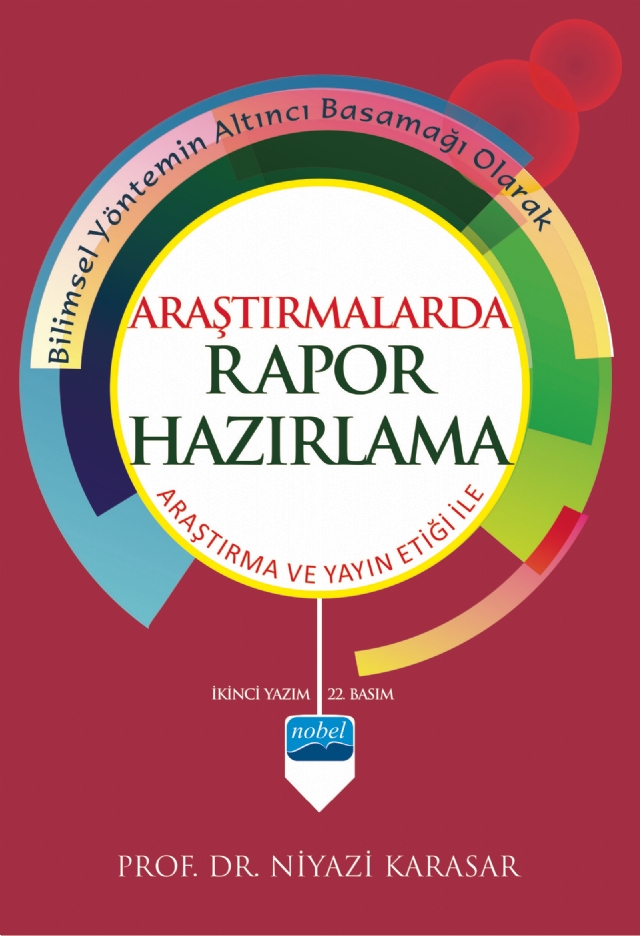
This book, prepared by the author, who believes that researches can be evaluated with the processes followed, and therefore adds the reporting step to the traditional scientific method perception, is an applied model of the basic concepts, principles and techniques related to research reports.
With the twentieth edition, the book was rewritten in the light of the "Scientific Will Perception Framework" developed by the author. In this second article (“2nd edition”), although the basic structure of the first article is preserved, a new section has been added and measures to facilitate implementation are included.
In the new article, in the “Research and Publication Ethics” section added to the book, examples of ethical rules that are considered at different levels from universal to national and institutional; The functions and processes of plagiarism (similarity) checks are explained.
The technical conveniences that come with computer technology are largely reflected in the model. In this context, concrete guides and templates were prepared. Important innovations and conveniences were exemplified in subjects such as chapter and subsection title definitions, table of contents, citing references and creating bibliography. In the citations, a unique Karasar format that can be mounted in Microsoft Word has been developed and made available. In addition to the examples in the book, the web site addresses where the recommended applications are designed and access/discount is free are given.
The previous steps of the scientific method were given in the book "SCIENTIFIC RESEARCH METHOD: Concepts Principles Techniques", which was published in the 2nd edition and 30th edition (32nd edition in 2017) with the Scientific Will Perception Framework in 2016. Thus, the harmony between these two books, which complement each other, was preserved.
With the twentieth edition, the book was rewritten in the light of the "Scientific Will Perception Framework" developed by the author. In this second article (“2nd edition”), although the basic structure of the first article is preserved, a new section has been added and measures to facilitate implementation are included.
In the new article, in the “Research and Publication Ethics” section added to the book, examples of ethical rules that are considered at different levels from universal to national and institutional; The functions and processes of plagiarism (similarity) checks are explained.
The technical conveniences that come with computer technology are largely reflected in the model. In this context, concrete guides and templates were prepared. Important innovations and conveniences were exemplified in subjects such as chapter and subsection title definitions, table of contents, citing references and creating bibliography. In the citations, a unique Karasar format that can be mounted in Microsoft Word has been developed and made available. In addition to the examples in the book, the web site addresses where the recommended applications are designed and access/discount is free are given.
The previous steps of the scientific method were given in the book "SCIENTIFIC RESEARCH METHOD: Concepts Principles Techniques", which was published in the 2nd edition and 30th edition (32nd edition in 2017) with the Scientific Will Perception Framework in 2016. Thus, the harmony between these two books, which complement each other, was preserved.
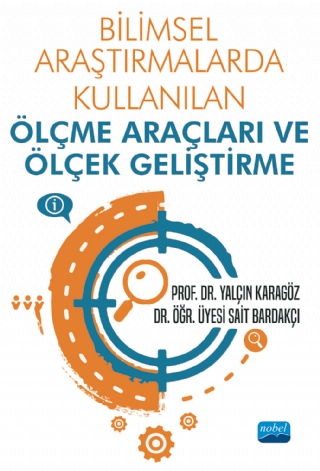
The way to reach accurate information in a scientific research is to collect as much error-free data as possible. This is only possible with the use of reliable and valid measurement tools developed using scientific methods. In this book, it is aimed to discuss the development processes of a reliable and valid measurement tool in detail.
In the book, the development processes of questionnaires, scales and tests, which are measurement tools used in quantitative scientific research, are explained in detail with SPSS and AMOS solutions. The solution and interpretation of the examples for the types of reliability and validity that the scales should have have been tried to be presented in a simplicity that can be easily understood. The steps of adapting a scale developed in a foreign language into Turkish are also included. In the last part, data collection methods used in qualitative scientific research are discussed together with their strengths and weaknesses.
This book is a work that can be used by researchers who do scientific research, especially scale development studies, and students studying at the graduate level.
In the book, the development processes of questionnaires, scales and tests, which are measurement tools used in quantitative scientific research, are explained in detail with SPSS and AMOS solutions. The solution and interpretation of the examples for the types of reliability and validity that the scales should have have been tried to be presented in a simplicity that can be easily understood. The steps of adapting a scale developed in a foreign language into Turkish are also included. In the last part, data collection methods used in qualitative scientific research are discussed together with their strengths and weaknesses.
This book is a work that can be used by researchers who do scientific research, especially scale development studies, and students studying at the graduate level.
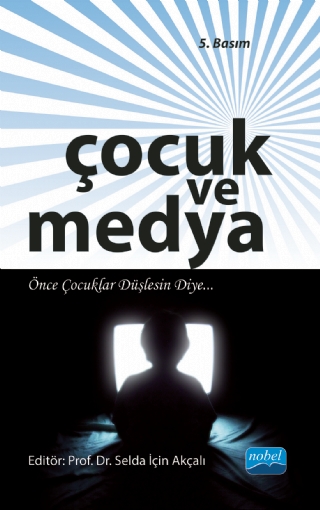
The media has become one of the most important parts of our daily lives by transforming and often reproducing the values of the society we live in. Undoubtedly, children are the most vulnerable segment of society in the face of the media. Children are abused not only by the media, but also in other social areas – legal, political and economic.
We believe that the main purpose in any child-related problem is to evaluate the existing conditions with a realistic eye and to create and implement an emergency action plan with the participation and sensitivity of all parties. In today's world, where the diplomatic and political dimensions of events and facts come to the fore rather than the solution of the problems experienced, "The realization of children's rights is the fulfillment of responsibilities." With the hope that this book, which deals with the subject of media and children from various dimensions, will contribute to a more sensitive approach to all kinds of issues related to children.
Children who manage to become children are very lucky, they are very magical…
We believe that the main purpose in any child-related problem is to evaluate the existing conditions with a realistic eye and to create and implement an emergency action plan with the participation and sensitivity of all parties. In today's world, where the diplomatic and political dimensions of events and facts come to the fore rather than the solution of the problems experienced, "The realization of children's rights is the fulfillment of responsibilities." With the hope that this book, which deals with the subject of media and children from various dimensions, will contribute to a more sensitive approach to all kinds of issues related to children.
Children who manage to become children are very lucky, they are very magical…
This book is intended to explain to researchers how to perform multilevel regression models and analysis through the HLM program. In the first part of the book, which consists of four parts, the statistical foundations of multilevel regression models have been tried to be mentioned. In the second, third and fourth sections, applications are given on a completely exemplary research situation. In these sections, firstly, an exemplary research situation is explained, then how to transfer the data of this research situation to the HLM program and how the analysis is carried out are explained in detail with visuals. Since one of the most important problems for researchers is how to report their analyzes, a table and an example of interpretation are also included in the sections where the applications are made. In the book, the application of analysis is given priority rather than theoretical foundations.
Behavioral Sciences is a book that will benefit anyone who wants to know themselves, understand the reasons for the attitudes and behaviors exhibited, and complete their personal development in the field of human relations. The book consists of 19 units. In units 1 and 2, the development and basic concepts of behavioral sciences, and in units 3, 4, 5 and 6, culture, cultural change, social influence and conformity behavior, social structure, social relations and social institutions are emphasized. Learning and perception in units 7 and 8, social groups in unit 9, emotional intelligence, personality and self in units 10 and 11 are explained in detail.
Attitude and prejudice in the 12th unit, individual communication, adaptation problems and defense mechanisms, behavioral disorders in the 13th, 14th and 15th units, methods of coping with stress in the 16th, 17th and 18th units, motivation and leadership, and time management in the 19th unit. has been elaborated upon in detail.
In the units enriched with up-to-date examples, a plain language that can be easily understood by anyone who reads it is used.
Attitude and prejudice in the 12th unit, individual communication, adaptation problems and defense mechanisms, behavioral disorders in the 13th, 14th and 15th units, methods of coping with stress in the 16th, 17th and 18th units, motivation and leadership, and time management in the 19th unit. has been elaborated upon in detail.
In the units enriched with up-to-date examples, a plain language that can be easily understood by anyone who reads it is used.

What is social change?
How do societies change?
What are the main theories explaining change?
What are the main dynamics of change in Turkey?
Social change is a fundamental field that concerns all subjects, concepts and theories of sociology. From the beginning to the present, many explanations about change have emerged in the sociology literature. Understanding the accumulation of these explanations is very important for a sociology student. Understanding change is essential for analyzing the workings of society.
Turkey's social structure is in a rapid and permanent change. Comprehensive and sustained research and new perspectives are needed to understand and explain this change. However, social change has not attracted much attention from sociology in Turkey. The number of theoretical studies, conceptual studies and empirical researches in the field is very few. This work in your hand was written within the scope of Social Structure Research Program to fill such a gap.
This book, which consists of 16 chapters, examines the concepts, theories and approaches related to change in sociology. The topics covered in this book, which is also designed as a textbook, are handled simply and expanded with examples. With the concept explanations, biographies and reading passages added to the chapters, the flow of the book is tried to be relaxed and different windows are opened in the mind of the reader.
How do societies change?
What are the main theories explaining change?
What are the main dynamics of change in Turkey?
Social change is a fundamental field that concerns all subjects, concepts and theories of sociology. From the beginning to the present, many explanations about change have emerged in the sociology literature. Understanding the accumulation of these explanations is very important for a sociology student. Understanding change is essential for analyzing the workings of society.
Turkey's social structure is in a rapid and permanent change. Comprehensive and sustained research and new perspectives are needed to understand and explain this change. However, social change has not attracted much attention from sociology in Turkey. The number of theoretical studies, conceptual studies and empirical researches in the field is very few. This work in your hand was written within the scope of Social Structure Research Program to fill such a gap.
This book, which consists of 16 chapters, examines the concepts, theories and approaches related to change in sociology. The topics covered in this book, which is also designed as a textbook, are handled simply and expanded with examples. With the concept explanations, biographies and reading passages added to the chapters, the flow of the book is tried to be relaxed and different windows are opened in the mind of the reader.

One of the areas where effective leadership practices produce important results is organizational life and especially companies.
This book called Leadership from Past to Present it includes topics that will benefit managers and leaders who will manage organizations, institutions and businesses, and people with leadership characteristics who will create change and transformation in society and nations. Leadership theories and styles are at the forefront of the topics covered in the book. In addition, women's leadership, self-leadership, culture and leadership, ethics and leadership, adaptive leadership and entrepreneurial leadership, which are not covered much in the book, are also discussed. The work also includes the dark side of the leadership phenomenon, which is always considered as a positive concept.
Leadership from Past to Present book is a reference source for those who will write a graduation homework, project, master's and doctoral thesis.
This book called Leadership from Past to Present it includes topics that will benefit managers and leaders who will manage organizations, institutions and businesses, and people with leadership characteristics who will create change and transformation in society and nations. Leadership theories and styles are at the forefront of the topics covered in the book. In addition, women's leadership, self-leadership, culture and leadership, ethics and leadership, adaptive leadership and entrepreneurial leadership, which are not covered much in the book, are also discussed. The work also includes the dark side of the leadership phenomenon, which is always considered as a positive concept.
Leadership from Past to Present book is a reference source for those who will write a graduation homework, project, master's and doctoral thesis.
Looking at the development process of humanity from a historical perspective, it is seen that every social structure has some basic problems. Among these problems, how that society will continue to exist from the past to the future has emerged as a fundamental and vital problem. Every social structure first asks, “What kind of person do we want?” seeks an answer to the question. This answer determines the horizon lines of the border points that the future and development line of that society will reach. The philosophy of education is the name of the most basic intellectual activity that speculates about the border point that the future of a society will reach and discusses the nature of this border point and guides to construct a clear vision for the future. Philosophy of education, as a philosophical action, is at the center of all educational decisions. So much so that, while the philosophy of education guides the determination of high policies in the ministry of education as an abstract structure, in the classroom of a small village school it becomes flesh and bone with the curriculum, teaching methodology and teacher. The philosophy of education is right next to the teacher with all its majesty in all of the time a teacher spends at school and in every action related to education outside of school. However, teachers and school administrators do not have much time to spare for philosophical thought in a busy working day, which is often spent with the speed, bustle and hustle and bustle of daily life. However, every conversation about the students in the teachers' room, every decision taken in the principal's room, every idea put forward in the branch meetings shows that the education philosophy is alive in the school.
This is the main purpose of this book! This book aims to find an answer to the question of what the philosophy of education is, what kind of structure it consists of, and which schools are formed by differentiating the answers to the basic problems. It contributes to the development of a perspective in the reader as to why these schools emerged while meeting with many different traditions, from the most rooted schools of thought of the philosophy of education to the schools of thought we call modern. The main audience of this study, which is designed in a way that anyone who thinks about education can benefit, naturally consists of teachers and education faculty students. Texts on philosophy are often described as difficult. This is perhaps due to the rather complex nature of the topics covered. While discussing the subjects in this work, a plain expression was preferred as much as possible and the subjects were handled very clearly with the examples given. With this aspect, the work can be used as a basic text for the philosophy of education courses in the education faculties program, and can also be read as a basic introductory text for anyone interested in this field.
This is the main purpose of this book! This book aims to find an answer to the question of what the philosophy of education is, what kind of structure it consists of, and which schools are formed by differentiating the answers to the basic problems. It contributes to the development of a perspective in the reader as to why these schools emerged while meeting with many different traditions, from the most rooted schools of thought of the philosophy of education to the schools of thought we call modern. The main audience of this study, which is designed in a way that anyone who thinks about education can benefit, naturally consists of teachers and education faculty students. Texts on philosophy are often described as difficult. This is perhaps due to the rather complex nature of the topics covered. While discussing the subjects in this work, a plain expression was preferred as much as possible and the subjects were handled very clearly with the examples given. With this aspect, the work can be used as a basic text for the philosophy of education courses in the education faculties program, and can also be read as a basic introductory text for anyone interested in this field.

Undoubtedly, it has been the scientific method that sheds the most light on human beings, who are in search of understanding nature and discovering the unknown, in this process. The scientific method has gone through different phases throughout history; It has taken many years for a scientific research process on which scientists have agreed to become clear. In this process, science was influenced by different philosophies and different approaches emerged. Although the positivist perspective of science and social sciences is common, post-positivist, social constructivist and pragmatist perspectives in social sciences are also accepted as a scientific approach. Educational sciences under the umbrella of social sciences also follow the methodology in social sciences. Educational scientists need to have a command of scientific methodology as well as their own field. The books to be published in this field are important in terms of meeting the needs of educational researchers. The "Research Methods in Education" book prepared in this context is a scientific research methods book enriched with examples and details in the field of education.
This book can be used as an undergraduate and graduate course book in Education Faculties and Institutes. Considering the scope and content of the book, it will be seen that it can be used as a textbook as well as an academic resource as a guide for education researchers. While the research methods books in the literature tend to focus on a single approach, each approach has been tried to be given in detail in this book.
The first part of the book covers the foundations of scientific research, ways of knowing, paradigms that guide scientific research processes, scientific research process and ethical rules. In the second part, the definition of the research problem and the literature review, sampling and sampling methods are discussed. In the third part of the book, research methods are presented in detail and each method is supported by an example from the field of education. In the fourth and fifth sections, respectively, data collection and analysis techniques are mentioned. In the last part of the book, the reporting of scientific research is presented in detail.
This book can be used as an undergraduate and graduate course book in Education Faculties and Institutes. Considering the scope and content of the book, it will be seen that it can be used as a textbook as well as an academic resource as a guide for education researchers. While the research methods books in the literature tend to focus on a single approach, each approach has been tried to be given in detail in this book.
The first part of the book covers the foundations of scientific research, ways of knowing, paradigms that guide scientific research processes, scientific research process and ethical rules. In the second part, the definition of the research problem and the literature review, sampling and sampling methods are discussed. In the third part of the book, research methods are presented in detail and each method is supported by an example from the field of education. In the fourth and fifth sections, respectively, data collection and analysis techniques are mentioned. In the last part of the book, the reporting of scientific research is presented in detail.

Research Methods in Education is a bedside resource that provides information on the patterning of scientific research, data collection, analysis and reporting. In the first part of the book; “Why do we need research?” The answer to the question was sought, and it was emphasized how a prospective teacher or educational scientist should be a researcher. In the second part; The planning processes of educational researches were discussed in all aspects, and these processes were supported with examples. In the third part; “Where should I start the research?” It was tried to answer the question, literature review, ways and methods of accessing primary sources, major databases, journals and internet resources of the field of educational sciences. In the fourth chapter; The problem, problem selection and writing processes, which are the first steps of the research, are explained in detail. In the fifth section; common research types in educational research; In the sixth chapter, the ways and methods about whom and where to apply to solve the problem in educational research are discussed. In the seventh chapter, the methods of obtaining the data needed for the solution of the data; in the eighth chapter, techniques for analyzing data; In the ninth chapter, the issues of checking the accuracy and credibility of the results are discussed in detail. The tenth chapter of this book deals with the subject of “teacher as an action researcher” in detail, which we think is very important for teachers and teacher candidates. In the eleventh and last chapter of this book, ethnography research and processes in education are explained.
A person who can communicate with the other end of the world and is instantly aware of what is happening finds it natural that he does not know his neighbor living in the same building. In today's world, where a new technology is put into the service of humanity every day, such negativities show that the role of effective communication is more and more important than ever before.
The narratives, far from claiming to be the last word or to form definitive judgments, aim to help each person discover the essence of communication and especially body language. The slightest contribution to have a positive and different perspective in your communication with the people around you will ensure that the work achieves its purpose.
The narratives, far from claiming to be the last word or to form definitive judgments, aim to help each person discover the essence of communication and especially body language. The slightest contribution to have a positive and different perspective in your communication with the people around you will ensure that the work achieves its purpose.

Communication is something we cannot give up in order to understand, to explain, or to agree… A cycle that we cannot escape from, continuing and responding to what we understand, what we say, and our agreements… An escalator that goes and comes continuously from us to us, from us to you, from you to us, in short from person to person… A cornerstone of life. Contact…
It is a book that guides all individuals in the society these days when we complain about lack of communication and realize that communication is important... While it contributes to learning what communication skills are, it also sheds light on people's ability to see where they make mistakes... It answers the following questions that come to mind:
They don't understand me, I can't explain myself, what should I do?
I think I empathize, or am I not?
There is a constant conflict between us, how can I resolve it?
I'm unsuccessful in group work, why can't I express myself?
I can't convince… How can I do it?
Communication in the family is broken… Why?
My communication with my friends is very bad at my workplace, how can it be improved?
Am I a good listener?
It is a book that guides all individuals in the society these days when we complain about lack of communication and realize that communication is important... While it contributes to learning what communication skills are, it also sheds light on people's ability to see where they make mistakes... It answers the following questions that come to mind:
They don't understand me, I can't explain myself, what should I do?
I think I empathize, or am I not?
There is a constant conflict between us, how can I resolve it?
I'm unsuccessful in group work, why can't I express myself?
I can't convince… How can I do it?
Communication in the family is broken… Why?
My communication with my friends is very bad at my workplace, how can it be improved?
Am I a good listener?

Communication is a long process that started with the existence of human beings in the world, has survived to the present day and will continue in our future.
It is clear that it would be so difficult to explain a subject with such wide borders in the numbered pages of a book! However, by placing certain limitations, important parts of this long adventure were taken and tried to be conveyed to the reader within the framework of the introduction.
Starting from the definition of communication within this kind of limitation, after general information about communication such as its process, relationship with other disciplines, communication types, functions and models, interpersonal communication, mass communication and mass media, news agencies, historical communication and mass communication in Turkey. development, organizational communication, internet and social media. In the last two chapters of the book, the effects of communication on society and communication researches are discussed.
Each of these introductory information; It is researched, analyzed and published under separate headings by other academics, authors and researchers. The aim of this book, titled "Introduction to Communication", is to give general information about such studies as preliminary, and to direct those who want to deepen in their subjects to such studies.
It is clear that it would be so difficult to explain a subject with such wide borders in the numbered pages of a book! However, by placing certain limitations, important parts of this long adventure were taken and tried to be conveyed to the reader within the framework of the introduction.
Starting from the definition of communication within this kind of limitation, after general information about communication such as its process, relationship with other disciplines, communication types, functions and models, interpersonal communication, mass communication and mass media, news agencies, historical communication and mass communication in Turkey. development, organizational communication, internet and social media. In the last two chapters of the book, the effects of communication on society and communication researches are discussed.
Each of these introductory information; It is researched, analyzed and published under separate headings by other academics, authors and researchers. The aim of this book, titled "Introduction to Communication", is to give general information about such studies as preliminary, and to direct those who want to deepen in their subjects to such studies.

It would not be wrong to call the age of communication, where social media, virtual networks and mass communication advance with giant strides, as the age of image.
The importance of image structuring at individual, organizational and national levels is related to the fact that the image is a phenomenon that can be established and managed. Image studies are at the focal point of public relations. All other work is shaped around this focal point. For this reason, characterizing the activities carried out to create an image as public relations will be insufficient in naming the activities carried out. It would be more correct to say "Image Engineering" instead.
Within the framework of the SA 8000 Social Responsibility standard determined in 1997, businesses have started to contribute to the fields of Social Entrepreneurship, which also aims to create a positive image by proving to their target audience that they work with a "win-win" mentality and to provide a sustainable contribution to the welfare of the society by supporting disadvantaged people within the scope of their social responsibilities.
The target audiences defined within the scope of public relations are quite broad. It starts from within the business, from the employees, customers, potential customers, competitors, government, etc. It extends to many popular communities at the national and international level. One of the most important tools in reaching large masses of people; media, the other is the virtual environment. Thanks to virtual networks and social media, the business has been able to have the freedom to manage its own news. Moreover, it has become easier to manage the image of the enterprise, which can be edited 24 hours a day, 7 days a week, and can shape the desired visuality and content at any time in an extremely dynamic environment. However, considering how fast the spread of information as well as its creation can be in the age of communication, it should be accepted that the preservation of the image has become more difficult than before.
The importance of public relations activities is gradually increasing due to the search for answers on how to protect the image as well as how to structure the image in the desired direction.
The importance of image structuring at individual, organizational and national levels is related to the fact that the image is a phenomenon that can be established and managed. Image studies are at the focal point of public relations. All other work is shaped around this focal point. For this reason, characterizing the activities carried out to create an image as public relations will be insufficient in naming the activities carried out. It would be more correct to say "Image Engineering" instead.
Within the framework of the SA 8000 Social Responsibility standard determined in 1997, businesses have started to contribute to the fields of Social Entrepreneurship, which also aims to create a positive image by proving to their target audience that they work with a "win-win" mentality and to provide a sustainable contribution to the welfare of the society by supporting disadvantaged people within the scope of their social responsibilities.
The target audiences defined within the scope of public relations are quite broad. It starts from within the business, from the employees, customers, potential customers, competitors, government, etc. It extends to many popular communities at the national and international level. One of the most important tools in reaching large masses of people; media, the other is the virtual environment. Thanks to virtual networks and social media, the business has been able to have the freedom to manage its own news. Moreover, it has become easier to manage the image of the enterprise, which can be edited 24 hours a day, 7 days a week, and can shape the desired visuality and content at any time in an extremely dynamic environment. However, considering how fast the spread of information as well as its creation can be in the age of communication, it should be accepted that the preservation of the image has become more difficult than before.
The importance of public relations activities is gradually increasing due to the search for answers on how to protect the image as well as how to structure the image in the desired direction.

The indispensable element for all businesses is people. For this reason, businesses that attach importance to the selection, placement, training, promotion, evaluation and retirement of their employees have always been successful in business life.
The human resources management book is a resource that people or institutions that want to be successful in the processes from the recruitment of the personnel to their retirement can apply.
The human resources management book is a resource that people or institutions that want to be successful in the processes from the recruitment of the personnel to their retirement can apply.

While the human element that makes up the society affects geography and culture on the one hand, it is also affected by geography and culture. The human element of the social structure consisting of men and women differs from society to society according to the position of these two sexes in the structure. The position of women and men in society is one of the most important factors in determining the place of that society in other societies.
The meanings ascribed to women and men by society differentiate and differentiate the contributions of the sexes to social life, even by drawing sharp boundaries, sometimes visible and sometimes invisible barriers/prohibitions. This situation; It affects every aspect of the social structure, from family life regulated by gender to individual relations, from business life to educational status.
The cultural rituals, which constitute the main source of the differences in the social roles of these two sexes, in which the existence of one is not possible without the other, has sometimes brought the woman to the fore, sometimes the man, to the point of dominating the other and even depriving him of all kinds of rights. This deprivation and domination has been mostly in favor of men in the history of humanity, and women have been pushed into the secondary plan by being overshadowed by men in almost every era and society.
This book; “Women in Turks”, “Women in Anatolia”, “Women in Nomadic Culture”, “Bacıyan-ı Rum and Women Craftsmen in Anatolia”, Women in the West”, “II-IX. It covers the topics of "Women and Music in the Turks in the Centuries", "Violence Against Women", "Women with Statistics", "Education of Girls in the Late Ottoman Period and the Professional Life of Teacher Faika Ünlüer".
The meanings ascribed to women and men by society differentiate and differentiate the contributions of the sexes to social life, even by drawing sharp boundaries, sometimes visible and sometimes invisible barriers/prohibitions. This situation; It affects every aspect of the social structure, from family life regulated by gender to individual relations, from business life to educational status.
The cultural rituals, which constitute the main source of the differences in the social roles of these two sexes, in which the existence of one is not possible without the other, has sometimes brought the woman to the fore, sometimes the man, to the point of dominating the other and even depriving him of all kinds of rights. This deprivation and domination has been mostly in favor of men in the history of humanity, and women have been pushed into the secondary plan by being overshadowed by men in almost every era and society.
This book; “Women in Turks”, “Women in Anatolia”, “Women in Nomadic Culture”, “Bacıyan-ı Rum and Women Craftsmen in Anatolia”, Women in the West”, “II-IX. It covers the topics of "Women and Music in the Turks in the Centuries", "Violence Against Women", "Women with Statistics", "Education of Girls in the Late Ottoman Period and the Professional Life of Teacher Faika Ünlüer".
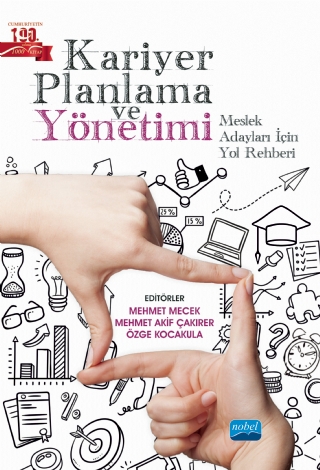
Career planning refers to the strategy one uses to set career goals and the ways to reach those goals. Having a career plan is critical for candidates who want to be successful not only in business but in all areas of life. Career planning is a multi-stage process in which career stages must be comprehensively addressed and executed in order for the candidate to achieve the success they want to achieve. With career planning, the candidate will have the chance to think in advance about alternative ways and routes for his future professional life, so that he will be able to construct his career journey on a “scenario-based” basis. A thoughtful career plan will both shape social life and provide a roadmap for the professional future. Thus, it will be possible to make informed choices about current job opportunities and potential future career opportunities. This book has been prepared with the contributions of expert academics, aimed at candidates, academics and professionals in business life who are looking for a guide both to see the current opportunities in their career journey and to explore potential career opportunities in the future. In each section, besides theoretical information, success stories of real people in their career journeys, advisory opinions given by experts in the field to candidates related to the subject, and additional reading suggestions for readers who want to deepen in the relevant section, as well as movie recommendations are given. We wish you a pleasant reading, hoping that it will be a useful guide for all readers.

The book Organization Theory has been written to introduce the discipline of organization theory to the reader, to convey different perspectives, topics and theories in this field, and to create an infrastructure that can evaluate them. In the book, from the 19th century, when modernism, which emerged with the positivist approach in social sciences, shed light on the theory of organization, how the theory of organization developed until the 21st century, when the postmodernist approach was dominant in organization theory, which approaches were dominated by the theory of organization at different times, between approaches. It is aimed to systematically convey to the reader how conflicts are reflected in organizational theory and what difficulties they create in understanding organizations. While explaining how the theory of organization emerged and developed from a historical perspective, the book also aims to illuminate how social change overlaps with developments in other fields of science and its philosophical development as well as chronologically.
For effective learning of organizational theory, the diversity and complex nature of the field must first be acknowledged. Rather than trying to reduce the theory of organization to a single point of view, it is necessary to examine and enrich it within the framework of different perspectives of many paradigms. In this book, the complexity of organizational theory and its relevance to management practices as well as to social life are revealed by critical and distinctive assessments of different approaches, beyond the coherent and complementary explanations brought by the isomorphic approaches in many books to this field. It is aimed to break stereotypes in organizational theory, to prevent analysis based on a single paradigm, to prepare a suitable ground for reflexive thinking that is open to discussion and criticism, and to encourage a supra-paradigmatic understanding. Ultimately, the reader is expected to be able to understand the organization from different perspectives, think critically, move organizational theory beyond existing thought patterns, and develop enriching theoretical dialogues.
For effective learning of organizational theory, the diversity and complex nature of the field must first be acknowledged. Rather than trying to reduce the theory of organization to a single point of view, it is necessary to examine and enrich it within the framework of different perspectives of many paradigms. In this book, the complexity of organizational theory and its relevance to management practices as well as to social life are revealed by critical and distinctive assessments of different approaches, beyond the coherent and complementary explanations brought by the isomorphic approaches in many books to this field. It is aimed to break stereotypes in organizational theory, to prevent analysis based on a single paradigm, to prepare a suitable ground for reflexive thinking that is open to discussion and criticism, and to encourage a supra-paradigmatic understanding. Ultimately, the reader is expected to be able to understand the organization from different perspectives, think critically, move organizational theory beyond existing thought patterns, and develop enriching theoretical dialogues.

Official correspondence, speeches and meetings in public and corporate life (business environment), meetings, ceremonies and ceremonial events; invitations, visits and banquets; official business, transactions and activities are carried out in accordance with the protocol and social behavior rules as form and method. Therefore, knowing and obeying the protocol and social behavior rules is important and necessary in terms of representation and reputation. Because people and institutions who know the protocol and social behavior rules, obey these rules and apply them are always appreciated and preferred in public and social life.
The aim of the book is to provide all students studying at universities, all managers working in public institutions and private institutions (businesses), executive candidates, executive assistants, experts, all officials who are at the point of contact with the public and provide services to the public, to gain protocol knowledge and skills that they will use in their management, business and social lives. enable them to apply this knowledge successfully; thus increasing their success, effectiveness and prestige at individual, institutional, national and international levels.
This book has been prepared in accordance with the Protocol and Social Behavior Rules curriculum taught in the Office Management and Executive Assistant Vocational Schools of universities.
The aim of the book is to provide all students studying at universities, all managers working in public institutions and private institutions (businesses), executive candidates, executive assistants, experts, all officials who are at the point of contact with the public and provide services to the public, to gain protocol knowledge and skills that they will use in their management, business and social lives. enable them to apply this knowledge successfully; thus increasing their success, effectiveness and prestige at individual, institutional, national and international levels.
This book has been prepared in accordance with the Protocol and Social Behavior Rules curriculum taught in the Office Management and Executive Assistant Vocational Schools of universities.
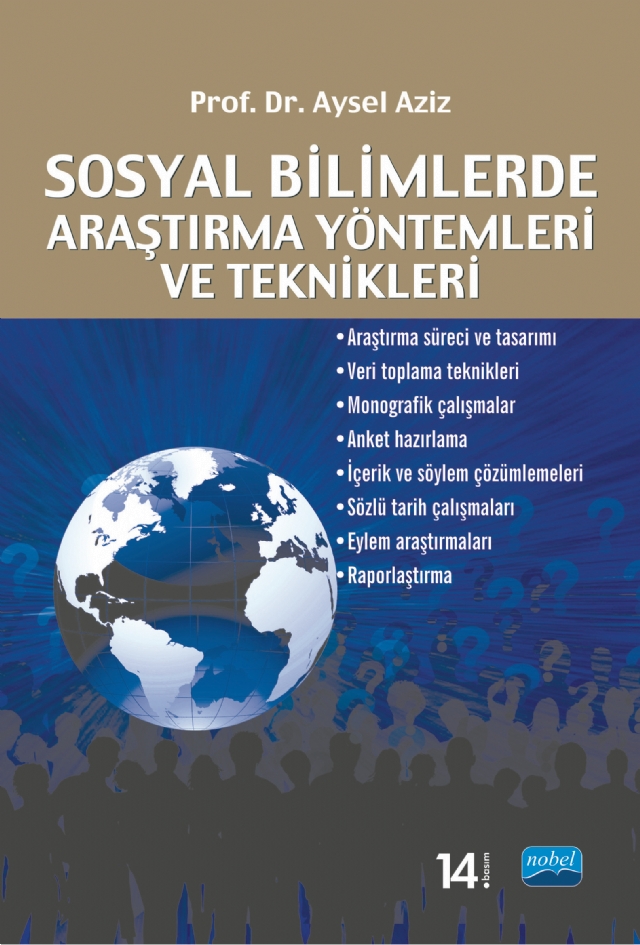
How is research done in the social sciences? The book tries to answer this question from A to Z, starting from the thought stage of the research, explaining what processes it went through, how its design was made, how the data sources related to the research were collected, what observation techniques were available. Among these observation techniques, indirect and direct methods and data collection techniques used in both academic studies and social research are explained. It focuses on the features of preparing a questionnaire (questionnaire), one of the common observation techniques needed in many fields. Monography, content and discourse analysis, which are widely and intensively used as observation techniques, and oral history studies and action research, which are among the direct observation methods that are becoming more and more widespread in different disciplines, are also included. In the last part of the research, the rules for writing the findings and results of a research are explained.
In the "Appendix" part of the research, there are updated examples of data collection techniques described in the book and jargon definitions related to the field.
In the "Appendix" part of the research, there are updated examples of data collection techniques described in the book and jargon definitions related to the field.
Competence-Based Human Resource Management was first used in developed countries, especially in recent years. Although the concept of competence was introduced in the world in the 1960s, the implementation of Competency-Based Human Resources Management is very recent. Especially in our developing country, thanks to foreign investments and companies with foreign partners, domestic companies have had the opportunity to get to know this new approach and system and to see its benefits and apply it.
On the one hand, our businesses' desire to make a difference while seeking competitive advantage, on the other hand, the pressures of the legislation regulating business life and adopted in the European Union harmonization process, humanistic approaches to the employees and the pursuit of peace in the workplace and thus increasing efficiency and productivity are very important in the spread of the competence-oriented approach to human resources. played a role.
In this book, after examining the historical development of human resources, basic approaches, strategic management of human resources, behavioral, technical and legal dimensions of this function are also included. In addition, the classic human resources management functions in the book have been enriched by adding a competence-based management vision.
On the one hand, our businesses' desire to make a difference while seeking competitive advantage, on the other hand, the pressures of the legislation regulating business life and adopted in the European Union harmonization process, humanistic approaches to the employees and the pursuit of peace in the workplace and thus increasing efficiency and productivity are very important in the spread of the competence-oriented approach to human resources. played a role.
In this book, after examining the historical development of human resources, basic approaches, strategic management of human resources, behavioral, technical and legal dimensions of this function are also included. In addition, the classic human resources management functions in the book have been enriched by adding a competence-based management vision.
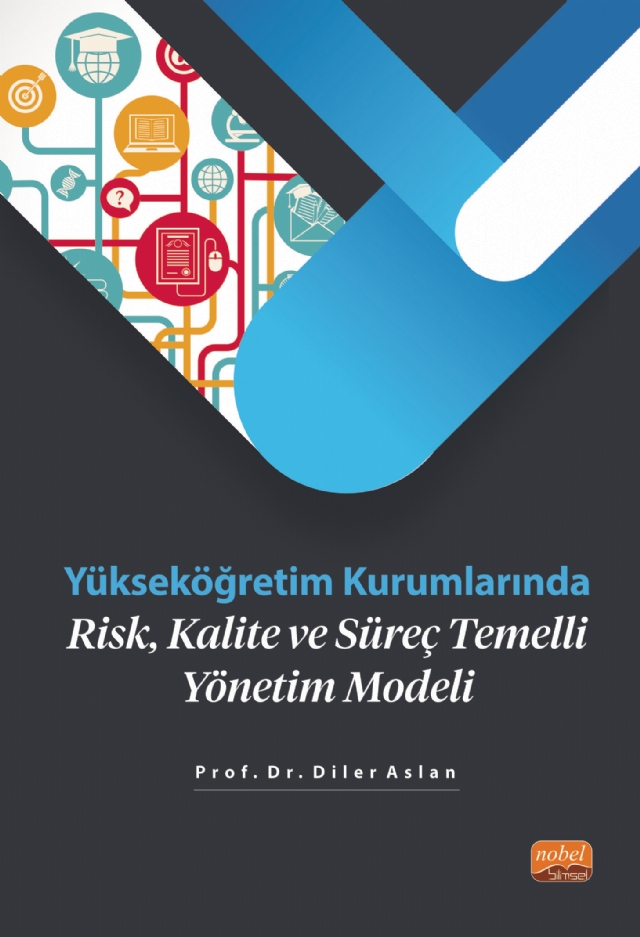
Higher education institutions (HEIs) are the knowledge centers of a society. They aim to ensure that their graduates are well-equipped in terms of professional and research competencies and their personal development. In addition, they have responsibilities to guide and encourage practices that benefit the economy and society. HEIs must think globally, competing internationally with their locally produced knowledge and innovations. Being a pioneer and guide in the use of rapidly developing technology with the best practices is among its responsibilities.
Their success in guiding the society in education (face-to-face, distance learning and hybrid or blended), research and development, social contribution, entrepreneurship, innovation and digital transformation is directly proportional to their ability to establish a well-structured internal quality assurance system, and spread the quality culture to the society.
The COVID-19 pandemic has shown that they need to have an agile structure against unexpected risks as well as anticipated risks. One of the factors contributing to the agile structure is risk- based thinking.
Process approach in the management is effective in achieving both agility and continuous
improvements quickly, as it allows focusing on every detail regarding the execution of work.
The structure of a HEI is too complex. In addition to the requirement to comply with legal
regulations, each institution creates a management model appropriate to its own structure. Most HEIs endeavor to align their established management systems with the requirements of quality management standards, such as ISO 9001, as well as various excellence models and institutional accreditation criteria. If the institution decides to structure the management system with process approach and adapts risk and quality management to the processes while defining and establishing them, it will operate the continuous improvement system more effectively and efficiently, this will also prepare them to meet the requirements of other external assessments mentioned above. It is a proven fact.
In this book, a risk, quality and process-based management model is presented. The book covers the steps of recognizing and introducing the process framework of the HEI that is composed of the management and support processes and the main core processes such as the education (face-to-face and e-learning), research and development, public services. The steps also involve applying risk and quality management principles to every process. By following this book, the reader will be able to define and introduce all the processes of the higher education institution and establish the management system with the process approach. While readers familiarize themselves with each process, they will be able to create process-oriented risk and quality management according to the recommended steps. A continuous process improvement system by the Plan-Do-Check-Act (PDCA) Cycle will also be established. Hence, the institution will be ready for all the requirements of the external assessment programs of the higher education institutions, the ISO 9001 Quality Management System Requirements Standard, the excellence models and the institutional accreditation.
The book is designed to be used as a handbook and consists of 15 main chapters and 8
appendices. In addition to the mentioned above, the reader finds the useful information about the processes for internationalism, entrepreneurship, innovation and digital transformation. It also covers some useful information on the teaching and learning centers, e-learning and micro-credentials, the readiness levels for research, development and innovation projects and the business process management software application models. The book presents findings from the project on establishing the infrastructure of a continuous quality assurance system in a HEI.
Finally, it reviews global HEI ranking systems and institutional indicators specific to HEIs in
Turkey.
This book should be read with the book “Process-Based Management Are You Ready for
Digital Transformation? (For Public, Private and Non-Governmental Organizations) by Diler
Aslan”
Their success in guiding the society in education (face-to-face, distance learning and hybrid or blended), research and development, social contribution, entrepreneurship, innovation and digital transformation is directly proportional to their ability to establish a well-structured internal quality assurance system, and spread the quality culture to the society.
The COVID-19 pandemic has shown that they need to have an agile structure against unexpected risks as well as anticipated risks. One of the factors contributing to the agile structure is risk- based thinking.
Process approach in the management is effective in achieving both agility and continuous
improvements quickly, as it allows focusing on every detail regarding the execution of work.
The structure of a HEI is too complex. In addition to the requirement to comply with legal
regulations, each institution creates a management model appropriate to its own structure. Most HEIs endeavor to align their established management systems with the requirements of quality management standards, such as ISO 9001, as well as various excellence models and institutional accreditation criteria. If the institution decides to structure the management system with process approach and adapts risk and quality management to the processes while defining and establishing them, it will operate the continuous improvement system more effectively and efficiently, this will also prepare them to meet the requirements of other external assessments mentioned above. It is a proven fact.
In this book, a risk, quality and process-based management model is presented. The book covers the steps of recognizing and introducing the process framework of the HEI that is composed of the management and support processes and the main core processes such as the education (face-to-face and e-learning), research and development, public services. The steps also involve applying risk and quality management principles to every process. By following this book, the reader will be able to define and introduce all the processes of the higher education institution and establish the management system with the process approach. While readers familiarize themselves with each process, they will be able to create process-oriented risk and quality management according to the recommended steps. A continuous process improvement system by the Plan-Do-Check-Act (PDCA) Cycle will also be established. Hence, the institution will be ready for all the requirements of the external assessment programs of the higher education institutions, the ISO 9001 Quality Management System Requirements Standard, the excellence models and the institutional accreditation.
The book is designed to be used as a handbook and consists of 15 main chapters and 8
appendices. In addition to the mentioned above, the reader finds the useful information about the processes for internationalism, entrepreneurship, innovation and digital transformation. It also covers some useful information on the teaching and learning centers, e-learning and micro-credentials, the readiness levels for research, development and innovation projects and the business process management software application models. The book presents findings from the project on establishing the infrastructure of a continuous quality assurance system in a HEI.
Finally, it reviews global HEI ranking systems and institutional indicators specific to HEIs in
Turkey.
This book should be read with the book “Process-Based Management Are You Ready for
Digital Transformation? (For Public, Private and Non-Governmental Organizations) by Diler
Aslan”